Vesta Tilley
 Great Britain
- Early life and stage debut
- The male impersonator
- Wartime performances and public service
- Retirement and legacy
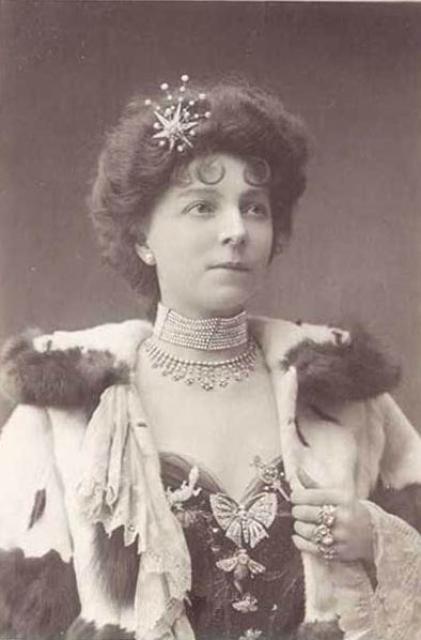
Vesta Tilley was the stage name of Matilda Alice Powles, one of Britain’s most celebrated music hall performers. A singer, dancer and comic actress, she became famous for portraying male characters with wit and precision. Her best-known creation, the dandy Burlington Bertie, made her a star, while her First World War performances earned her the popular nickname “England’s Greatest Recruiting Sergeant.”
Early life and stage debut
Tilley was born on May 13, 1864, in Worcester, England. Her father, Harry Ball, was a performer and music hall manager who helped guide her early career. She appeared on stage as a child, singing and dancing in her father’s touring act. By the age of five she was wearing boys’ clothes in performance, and she found that she could express herself particularly well in male roles.
As a young performer she was billed as “The Great Little Tilley.” She made her London stage debut with a solo singing and impressions routine in 1874, and the stage name Vesta Tilley became established later in the decade. Her act developed in the lively music halls of Victorian Britain, where audiences came for songs, comedy, dance and character performances.
The male impersonator
Tilley became one of the most successful male impersonators of her era. She portrayed a range of masculine types, including soldiers, sailors, policemen, judges and fashionable young men. Her costumes were carefully tailored and her physical mannerisms closely observed, allowing her to make each character both convincing and comic.
Her most enduring role was Burlington Bertie, a fashionable man-about-town who avoids work and spends his time enjoying leisure. The character’s self-importance and idleness made him a comic target, and Tilley’s performance turned the song “Burlington Bertie” into a major success. Her stage work often gently exposed the habits and pretensions of men, while her skill as a performer made the act popular across social classes.
Tilley’s stage persona also helped shape popular ideas about clothing and gender performance. She was admired for the confidence and polish of her male characters, and her suits and accessories attracted public attention. Offstage, she maintained a distinct private life and did not present the stage persona as her personal identity.
Wartime performances and public service
During the First World War, Tilley used her fame to support the British war effort. Appearing in khaki uniform, she sang patriotic songs and performed characters such as the soldier “Tommy in the Trench.” She encouraged men in the audience to enlist and raised money for wounded servicemen. Her influence became so associated with recruitment that she was nicknamed “England’s Greatest Recruiting Sergeant.”
Her charitable work extended beyond the war. She supported children’s causes and served as president of the Music Hall Ladies’ Guild, an organization that provided aid to female variety performers. The guild’s work helped raise the standing of the profession and contributed to the broader movement for improved support of theatre artists.
Retirement and legacy
Tilley married music hall manager Walter de Frece in 1890. He later entered politics and was knighted, making her Lady de Frece. She retired from the stage in 1920 after a farewell tour; the proceeds were donated to children’s hospitals. Her retirement coincided with her husband’s political career, but it also closed a performance life that had lasted for more than five decades.
She died in 1952, aged 88. Tilley remains a defining figure in British music hall history: a popular entertainer whose meticulous character work and comic songs made male impersonation a major attraction. Her performances combined virtuosity with sharp observation, and her public role during wartime showed how a music hall star could influence audiences well beyond the theatre.