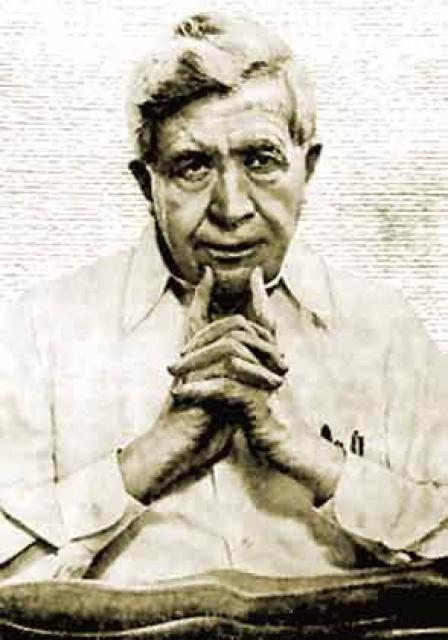
Vilyalmur Stefanson
 Canada
- Biography of Vilhjalmur Stefansson
- Early Life and Education
- Exploration and Expeditions
- Arctic Encounters and Ethnographic Work
- The Canadian Arctic Expedition
- Later Life and Legacy
Biography of Vilhjalmur Stefansson
Vilhjalmur Stefansson was a Canadian polar explorer, ethnographer, and writer. He was known for his extensive travels in the Arctic region and his contributions to the understanding of indigenous cultures.
Early Life and Education
Vilhjalmur Stefansson was born in 1879 in North Iceland. His father, Johann Stefansson, was a farmer who moved to Canada in 1876 and settled in Manitoba. Vilhjalmur was only 13 years old when his father died, and he had to work on farms and as a shepherd to support his family. Despite the challenges, Stefansson continued his education. He was initially accepted into the University of North Dakota but was later expelled for skipping classes. He then attended the University of Iowa, where he earned a bachelor's degree. In 1903, Stefansson became a student at Harvard University's Divinity School, where he developed an interest in anthropology.
Exploration and Expeditions
In 1904, Stefansson led an expedition to Iceland, Alaska, and the Arctic regions of Canada. From 1913 to 1918, he explored the Banks and Prince Patrick Islands. Stefansson's expeditions were characterized by his ability to adapt to the harsh conditions of the North and his practical approach to problem-solving. He gained recognition from renowned explorer Robert Peary, who praised Stefansson's physical and mental abilities.
Arctic Encounters and Ethnographic Work
During his expeditions, Stefansson lived among indigenous Inuit communities and learned their language and customs. He spent a winter with an Inuit family, participating in hunting and fishing activities and building snow houses. Stefansson's encounters with these communities provided valuable ethnographic material and insights into their way of life. He documented his experiences in various publications, including his article "The Icelandic Colony in Greenland" and his book "My Life with the Eskimos" (1913).
The Canadian Arctic Expedition
In 1913, Stefansson organized the Canadian Arctic Expedition, which aimed to explore the little-known Baffin Bay and the Arctic regions of Canada. The expedition lasted five years and involved a multidisciplinary team of researchers. Stefansson's leadership and expertise led to significant discoveries and contributions to Arctic research. Despite facing challenges, such as the sinking of their ship and being stranded on an ice floe, the expedition achieved its scientific objectives.
Later Life and Legacy
After completing his expeditions, Stefansson devoted himself to compiling and analyzing the vast amount of data and materials collected during his explorations. He began working on the "Arctic Encyclopedia," a comprehensive reference work on Arctic exploration and indigenous cultures. However, the project faced difficulties due to lack of funding and the onset of the Cold War. Stefansson eventually retired to Hanover, New Hampshire, where he continued his research and writing. He passed away in 1962.
Vilhjalmur Stefansson's contributions to Arctic exploration, ethnography, and understanding indigenous cultures continue to be recognized and celebrated. His works, including "My Life with the Eskimos" and "The Friendly Arctic," remain influential in the field of polar studies. Stefansson's determination, adaptability, and vast knowledge of the Arctic region make him one of the most renowned explorers of the 20th century.



