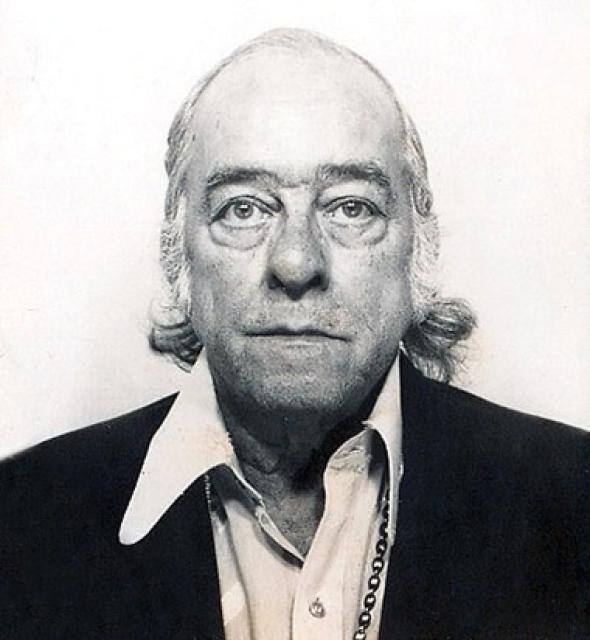
Vinicius de Moraes
 Brazil
Vinicius de Moraes made poetry sound at home in a book, on a theater stage and in a song drifting out of a Rio de Janeiro café. A diplomat by profession for much of his life, he became one of Brazil’s most beloved writers and a defining lyricist of bossa nova. His words joined the music of Antônio Carlos “Tom” Jobim, Baden Powell and Toquinho, carrying the rhythms and intimacy of Brazilian popular music to listeners around the world.
A poet finds his voice
Born in Rio de Janeiro on 19 October 1913, Marcus Vinicius da Cruz e Mello Moraes grew up in a household where music and literature were part of everyday life. He began writing poetry as a boy and later studied law at the University of Rio de Janeiro. His first collection, *The Road to Distance*, appeared in 1933. Early poems often carried a spiritual and philosophical tone; over time, his writing became more direct, sensual and attentive to the small details of love and ordinary life.
Moraes worked as a film critic and cultural writer before entering Brazil’s diplomatic service in 1943. The Foreign Ministry sent him abroad, including to Los Angeles and Paris, and his years overseas broadened his friendships with artists and writers. But literature and music remained central. He published poetry, wrote plays and chronicles, and continued to seek forms that brought high literary language closer to popular culture.
*Orfeu* and the birth of bossa nova
A turning point came with *Orfeu da Conceição*, his stage reimagining of the Orpheus myth in a Rio hillside community during Carnival. When the play opened in 1956, its music was written by a young Tom Jobim. Their collaboration grew into one of the most influential partnerships in Brazilian popular music. The French film adaptation, *Black Orpheus* (1959), brought the story to an international audience and won both the Palme d’Or at Cannes and the Academy Award for Best Foreign Language Film.
Moraes and Jobim went on to write songs that became classics of bossa nova, including “Chega de Saudade” (“No More Blues”), “Insensatez” (“How Insensitive”) and “Garota de Ipanema” (“The Girl from Ipanema”). The last, with Jobim’s melody and Moraes’s lyrics, became one of the most recorded Brazilian songs of all time. Moraes also forged important partnerships with guitarist Baden Powell, producing the Afro-samba songs “Berimbau” and “Canto de Ossanha,” and with Toquinho, with whom he performed and toured extensively in his later years.
The “little poet” in public life
Affectionately known as “O Poetinha,” or “the little poet,” Moraes moved freely between literary circles and popular entertainment. He remained a working diplomat until Brazil’s military government forced him into retirement in 1969, citing his lifestyle and public image. After leaving the Foreign Ministry, he devoted himself more fully to music, recording, touring and collaborating with a new generation of Brazilian artists.
His children’s poems also reached a wide audience. *The Ark of Noah*, a collection set to music, became a popular television special and received an International Emmy in 1981, after his death. He continued writing songs and performing until his final years, building a public identity in which the poet and the songwriter seemed inseparable.
Moraes died in Rio de Janeiro on 9 July 1980, aged 66. His legacy crosses genres: the formal poet of early collections, the playwright who brought a Greek myth into modern Brazilian life, and the lyricist whose songs helped give bossa nova its unmistakable blend of sophistication and ease.


