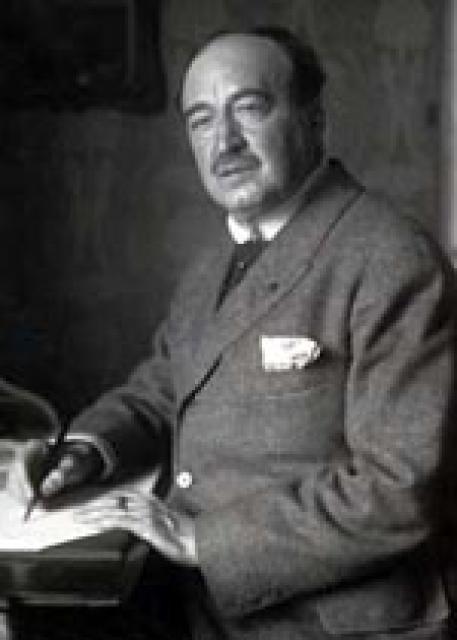
Visente Ibanies
 Spain
Spain- Early Life and Political Activism
- Parliamentary Career and Literary Breakthrough
- Social Tendenciosity and Critical Realism
- Shift to Psychological Analysis
- Pro-Allied Sentiments and World War I
- Later Works and Historical Fiction
- Exile and Legacy
Vicente Blasco Ibáñez: A Life Dedicated to Literature and Social Justice
Early Life and Political Activism
Vicente Blasco Ibáñez was born in Valencia, Spain on January 21 or 29, 1867. Born into a family of merchants, he pursued a degree in law. In 1885, he made his debut as a journalist and soon became a leader in the left-republican movement in Valencia. He published the newspaper "El Pueblo" ("The People") in 1891, facing persecution and multiple exiles for his political views.
Parliamentary Career and Literary Breakthrough
From 1898 to 1909, Blasco Ibáñez served as a representative in parliament for the Republican Party, developing close ties to socialists. In 1894, he began publishing a series of "Valencian" novels and short stories that emphasized social issues and criticized the corrupting influence of money and power. Notably, his novel "The Shack" (1898) depicted the social injustices faced by the rural poor.
Social Tendenciosity and Critical Realism
Between 1903 and 1905, Blasco Ibáñez embarked on a period of socially conscious writing. Novels such as "The Cathedral" and "The Horde" addressed fundamental issues of Spanish society, including the threat of revolution. He departed from the traditional domestic novel by incorporating social commentary into his works.
Shift to Psychological Analysis
From 1906 to 1909, Blasco Ibáñez wrote a series of philosophical and psychological novels, such as "The Naked Maja" and "Blood and Sand." In these works, he focused on the psychological experiences of gifted individuals in conflict with society.
Pro-Allied Sentiments and World War I
During World War I, Blasco Ibáñez strongly supported the Allies. However, his highly partisan and nationalistic depictions of the conflict compromised the artistic quality of his novels "The Four Horsemen of the Apocalypse" and "Mare Nostrum."
Later Works and Historical Fiction
In the 1920s, Blasco Ibáñez's later novels, including "The Land for All" and "The Pope of the Sea," were less successful than his earlier works. However, his posthumously published novel "In Search of the Great Khan" (1928) stands out for its portrayal of Christopher Columbus.
Exile and Legacy
After the military dictatorship was established in Spain in 1923, Blasco Ibáñez went into exile in France. Throughout his life, he remained a vocal supporter of the Soviet Union. Blasco Ibáñez died in Menton, France on January 16, 1928, leaving behind a legacy as a prolific writer who dedicated his work to exposing social injustice and exploring the human condition.


