Vladimir Arseniev
- Early Life and Education
- Inspiration from Geography
- Military Career and Relocation to the Far East
- Arrival in Vladivostok and Research Interests
- Expeditions and Archaeological Discoveries
- Collaboration with Nikolai Palchevsky
Early Life and Education
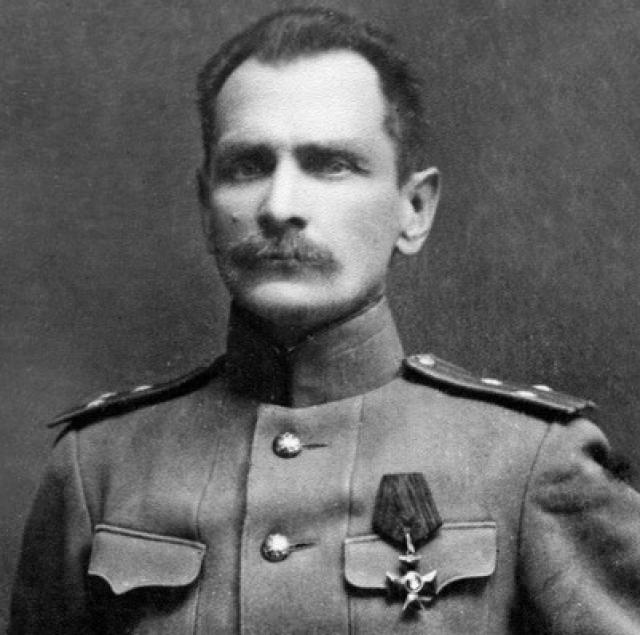
Vladimir Klavdiyevich Arseniev, a Russian geographer, ethnographer, and writer, was born on August 29, 1872, in St. Petersburg, Russia, to railway employee Klavdiy Fedorovich Arseniev. After completing his secondary education, Arseniev pursued military education at his parents' expense.
On November 22, 1891, Arseniev successfully passed the exams and enrolled as a volunteer in the 145th Novocherkassk Regiment, where he was assigned to the St. Petersburg Infantry Cadet School. Initially enthusiastic about the military life, Arseniev's interest waned due to the rigorous discipline and demanding studies.
Inspiration from Geography
Arseniev's passion for geography ignited during lectures by renowned Central Asian explorer M.E. Grum-Gzhimaylo. Grum-Gzhimaylo introduced Arseniev to the fascinating world of travel and advised him to explore the largely unknown Far East region.
Military Career and Relocation to the Far East
Upon graduating from the Cadet School on August 12, 1895, Arseniev was commissioned as a sub-lieutenant and assigned to the 145th Novocherkassk Infantry Regiment. In 1896, he was promoted to lieutenant and transferred to the 14th Olonets Infantry Regiment stationed in Lomza, Poland.
In 1900, Arseniev was promoted to captain and transferred, at his request, to the 1st Vladivostok Fortress Infantry Regiment. The journey to Vladivostok was adventurous, as Arseniev encountered the Boxer Rebellion in China and participated in the defense of Blagoveshchensk.
Arrival in Vladivostok and Research Interests
Arseniev arrived in Vladivostok on August 5, 1900, where he initially lived in a small house in a damp and foggy area known as Gniloy Ugol (Rotten Corner). Appointed as acting head of the training team for the regiment, Arseniev spent considerable time with young soldiers.
Arseniev's desire to understand the Far East region led him to join the Society of Hunting Enthusiasts. Through the Society for the Study of the Amur Region, he met fellow officer and local historian N.V. Kirilov, who introduced him to the natural sciences and ethnography. Arseniev joined the Society as an active member in 1903 and made significant contributions to its collections.
Expeditions and Archaeological Discoveries
Arseniev embarked on several expeditions in his spare time, studying the region's flora and fauna. During a vacation in 1906, he traveled to the Primorsky region and collected valuable archaeological artifacts. His findings were reported to the Chairman of the Amur Imperial Russian Geographical Society, who recognized his contributions and considered his explorations as official service.
Collaboration with Nikolai Palchevsky
Nikolai Alexandrovich Palchevsky, the former vice-chairman of the Society, became a close friend and collaborator of Arseniev. Palchevsky's goal was to establish a marine biological station at the museum. After a memorable first encounter, Palchevsky took Arseniev under his wing and shared his extensive knowledge of the region. Together, they undertook extensive expeditions and documented their findings.