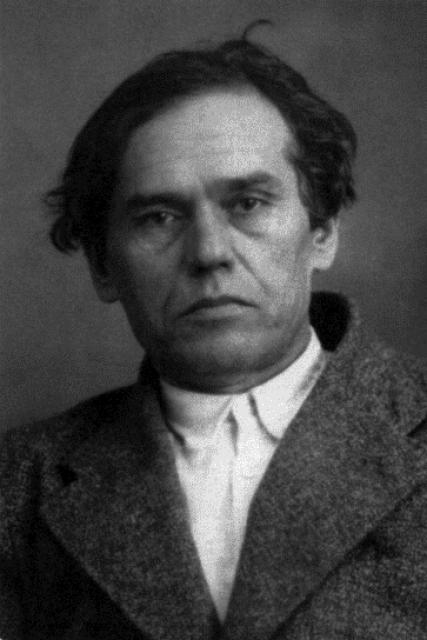
Vladimir Kirillov
- Early Life and Revolutionary Engagements
- Literary Pursuits and Proletarian Poetry
- Political Disillusionment and Departure from Proletarian Poetry
- Personal Life and Literary Legacy
Early Life and Revolutionary Engagements
Viktor Kirillov was born in the village of Kharino in 1885. His father worked in a bookstore in Smolensk, exposing him to literature from an early age. In 1903, Kirillov embarked on a career at sea as a cabin boy on a merchant ship. However, his life took a dramatic turn in 1905 when he actively joined the revolutionary movement.
Kirillov's revolutionary activities led to exile in Ust-Sysolsk from 1906 to 1909. Upon his return, he settled in St. Petersburg (later Petrograd) in 1914. His political activism continued, and he was mobilized into the army during World War I.
Literary Pursuits and Proletarian Poetry
In 1913, Kirillov published his first poems in the workers' press. He became a prominent figure in the "proletarian poetry" movement, which emphasized the struggles and aspirations of the working class. His early works were characterized by revolutionary fervor and a commitment to social justice.
Political Disillusionment and Departure from Proletarian Poetry
The introduction of the New Economic Policy (NEP) in 1921 disillusioned Kirillov and his close friend, M.P. Gerasimov. They perceived it as a betrayal of the revolutionary ideals and resigned from the Communist Party. As a result, Kirillov distanced himself from proletarian poetry, which he now saw as disconnected from reality.
Personal Life and Literary Legacy
Kirillov resided in the renowned "House of the Writers' Cooperative" in Moscow. He became the target of Stalin's purges and was arrested in 1937. Tragically, he was executed in 1937. His literary legacy was suppressed until his rehabilitation in 1957. A collection of his poems was published in 1958.
Kirillov is remembered for his groundbreaking work in proletarian poetry. Vladimir Mayakovsky, in his autobiography "I Myself," paid tribute to Kirillov's early attempts at avant-garde poetry. Kirillov's iconic line in his poem "We," a response to A.V. Lunacharsky's resignation in protest against the destruction of Russian cultural monuments, remains a powerful testament to his defiance and commitment to his beliefs.


