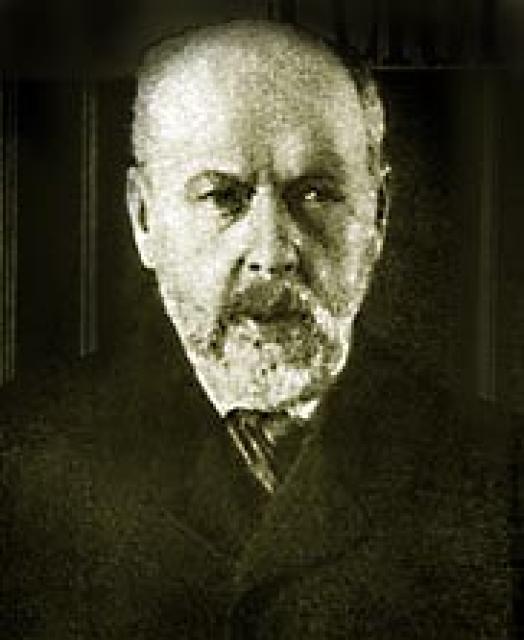
Vladimir Mesherskiy
 Russia
- Biography of Prince Vladimir Petrovich Meshchersky
- Literary and Publicistic Career
- Novelist and Satirist
- "Grazhdanin" Magazine
- Political Influence
- Personal Qualities and Philanthropy
- Later Life and Legacy
Biography of Prince Vladimir Petrovich Meshchersky
Early Life and EducationVladimir Petrovich Meshchersky was born in St. Petersburg, Russia, on May 10, 1839. His paternal lineage included renowned figures such as Prince Sergei Sergeevich Meshchersky and Princess Sophia Sergeevna Meshcherskaya. His maternal lineage traced back to the esteemed Russian historian and writer Nikolay Mikhailovich Karamzin. Growing up in an environment steeped in historical and literary heritage, Meshchersky's youthful aspirations were shaped by his admiration for Karamzin.
After receiving an exceptional education at home, Meshchersky graduated from the School of Law in 1857. He embarked on a brief career in the civil service, serving in the Senate and as a prosecuting attorney before being appointed a judge in the St. Petersburg District Court in 1859.
Literary and Publicistic Career
In 1861, Meshchersky's life took an unexpected turn when he was chosen to be a companion and tutor to the young Grand Dukes Nicholas and Alexander, sons of Emperor Alexander II. The experience profoundly influenced him and further ignited his interest in public affairs.
In 1867, Meshchersky abruptly resigned from his government post to pursue a career in journalism, a decision met with skepticism and disapproval within his aristocratic circles. His writings soon gained prominence for their incisive commentary on contemporary social and political issues. He published articles in such influential publications as "Severnaya Pchela," "Russkiy Invalid," "Moskovskie Vedomosti," and "Russkiy Vestnik."
Novelist and Satirist
Meshchersky's literary output extended beyond journalism to include an array of novels and satirical pamphlets that garnered both critical acclaim and controversy. Notable works included "10 Years in the Life of a Magazine Editor" (1869), "Notes of a Dead High School Student" (1875), and "The Women of St. Petersburg High Society" (1873-1874). His sharp wit and "photographic" method of writing, which often depicted recognizable figures in his satires, drew both admiration and ire from his contemporaries.
"Grazhdanin" Magazine
Meshchersky's name became synonymous with the magazine "Grazhdanin" (Citizen), which he founded in 1872. "Grazhdanin" became a platform for Meshchersky to advocate for his conservative views. He argued against the influence of foreign ideologies and the decline of traditional values in Russian society. Despite the magazine's popularity, it also attracted numerous detractors and sparked heated debates.
Political Influence
While Meshchersky never held an official government position, his connections within the aristocracy and his influential writings gave him a degree of political clout. He played a role in the appointment of Vyacheslav K. Plehve as Minister of the Interior in 1902 and was a staunch supporter of the monarchy. However, his outspoken nature and personal attacks on political opponents also alienated many.
Personal Qualities and Philanthropy
Despite his conservative leanings, Meshchersky was known for his personal generosity and compassion. He established a hospital for chronically ill children and provided assistance during the famine in Samara in 1873. He also supported the Society for the Care of Sick and Poor Children.
Later Life and Legacy
In his later years, Meshchersky became an inspiration for the right-wing and monarchist movements in Russia. He supported organizations such as the Union of the Russian People and the Union of Landowners.
Prince Vladimir Petrovich Meshchersky passed away on June 25, 1914, in Tsarskoye Selo. He was buried in the Alexander Nevsky Lavra in St. Petersburg. His legacy as a controversial but influential figure in Russian society continues to be debated today.




