Vladimir Shatov
 Russia
- Vladimir Sergeevich Shatov: A Life in Revolution and Anarchy
- Life in the United States
- Return to Russia
- Petrograd Soviet and October Revolution
- Civil War and Far Eastern Republic
- Later Career and Arrest
Vladimir Sergeevich Shatov: A Life in Revolution and Anarchy
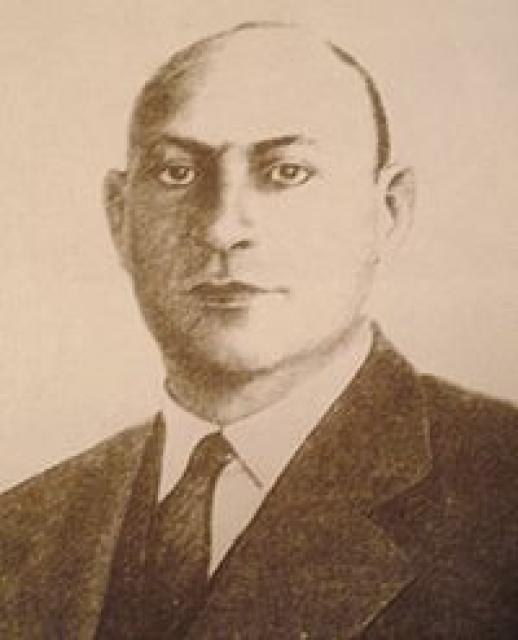
Early Life and Political ActivismVladimir Sergeevich Shatov was born on December 24, 1887, in Kiev, Ukraine. His family was of modest means, and Shatov received his education at the Kiev Commercial School. In 1903, he joined the Social Democratic movement, and in 1904, he was arrested for revolutionary activities. After his release, Shatov emigrated to the United States in 1907.
Life in the United States
In the United States, Shatov worked as a typesetter in a printing shop. He also became involved in the anarchist-syndicalist organization, the Industrial Workers of the World (IWW). Shatov rose through the ranks of the IWW and became the leader of its Russian branch.
Return to Russia
After the February Revolution in 1917, Shatov organized the return of political emigrants from the United States to Russia. He arrived in Vladivostok in May 1917 and immediately became involved in revolutionary activities. Shatov supported the Bolshevik platform and played an active role in the factory and plant committees (FZKs).
Petrograd Soviet and October Revolution
In October 1917, Shatov was elected a member of the Petrograd Soviet from the "Union of Anarchist-Syndicalist Propaganda." He actively participated in the preparation and execution of the October Armed Uprising. On the night of October 23rd, Shatov was present at Smolny when the uprising began.
Civil War and Far Eastern Republic
After the October Revolution, Shatov fought in the Civil War. He was sent to the Far East to organize the Far Eastern Republic (DVR), where he served as Minister of War, Minister of Transport, and head of the military-diplomatic mission to the Japanese command. In 1920, Shatov led the DVR delegation that negotiated a ceasefire agreement with the Japanese forces.
Later Career and Arrest
In the late 1920s, Shatov moved to Siberia and became involved in economic management. However, he was arrested in 1937 on charges of anti-Soviet activity and sentenced to death by a "troika" of the NKVD. Shatov was реабилитиated in 1955 after his death on August 7, 1943.