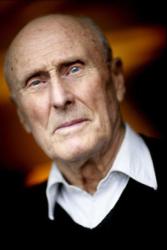
Wilhelm Mirbah-Harf
 Germany
Biography of Wilhelm Mirbach-Harff
Wilhelm von Mirbach-Harff was a German count and diplomat who served as the ambassador of Germany to Russia. He was born on July 6, 1871, and was assassinated on the same day in 1918 in Moscow, Russia.
Wilhelm Mirbach-Harff's assassination was considered a terrorist act, and for many years, it was interpreted in the USSR as a provocation by the Left Socialist-Revolutionary Party. This party, which had been part of the government coalition with the Bolsheviks since October 1917, aimed to disrupt the Brest-Litovsk Peace Treaty with Germany and seize power in the country.
On July 6, 1918, at 2:15 PM, Wilhelm Mirbach-Harff was approached by two individuals who showed Swiss embassy identification from the All-Russian Extraordinary Commission. They demanded a personal meeting with the German ambassador. Mirbach-Harff, advised of a possible assassination attempt, reluctantly agreed to meet them. The meeting lasted for more than 25 minutes before one of the individuals, Yakov Blumkin, pulled out a revolver and fired three shots, none of which hit their intended targets. As Mirbach-Harff attempted to flee, Blumkin shot him again, mortally wounding him. Mirbach-Harff died at 3:15 PM at the age of 47.
The assassination of Wilhelm Mirbach-Harff was not solely orchestrated by Blumkin and his accomplice, Nikolai Andreev. The German military and political elite, facing increasingly difficult conditions on the Western Front of World War I, needed to maintain the peace treaty signed with the Bolsheviks at Brest-Litovsk. The Bolsheviks, though reluctant to cooperate with the "obscene," "plunderous," and "cabalistic" German imperialists, had to adhere to the treaty as the fate of the Russian Revolution was now dependent on Berlin.
Mirbach-Harff found himself caught between the politics of forced partnership with the Bolsheviks on one side and the search for political alternatives to Lenin's government and support for anti-Soviet forces in Russia on the other. As a result, the ambassador had to navigate two mutually exclusive political lines, which made him vulnerable to the provocation that ultimately cost him his life.
Documents from the political archive of the German Ministry of Foreign Affairs, as well as those from Kaiser Wilhelm II, Chancellor Georg von Hertling, and State Secretary for Foreign Affairs Arthur Zimmermann, speak to the high regard in which Mirbach-Harff's work as the German ambassador to Soviet Russia was held. His official letters sent from Moscow to Berlin demonstrate his accurate understanding of the situation in the country, although there is evidence of an overestimation of pro-German sentiments.
In his report on the meeting with Lenin on May 16, 1918, Mirbach-Harff acknowledged the failure of the Brest-Litovsk policy. However, he believed that Germany's interests still required orientation toward the Leninist government, as any forces that might replace the Bolsheviks would seek to reunite with the territories detached from Russia under the Brest-Litovsk Treaty with the help of the Entente powers.
On May 18, 1918, just two days after the meeting with Lenin, Mirbach sent a telegram to Berlin expressing concern about the situation in Russia. He emphasized that, in his estimation, a one-time sum of 40 million marks would be needed to keep the Bolsheviks in power. A few days later, on June 3, the German ambassador telegraphed the Imperial Ministry of Foreign Affairs that, in addition to the one-time sum of 40 million marks, an additional 3 million marks per month would be needed to support the Lenin government.
State Secretary Arthur Zimmermann instructed Mirbach to continue providing financial assistance to the Bolsheviks. However, neither Zimmermann nor Mirbach were confident that Lenin would be able to stay in power with German money, which had contributed to the Bolsheviks' rise to power in October 1917. Mirbach believed that the Bolsheviks were living out their last days in the summer of 1918. Therefore, he proposed to prepare for Lenin's fall by forming a pro-German anti-Soviet government in Russia.
Berlin approved this proposal, and on June 13, 1918, Mirbach informed his superiors that various political figures were approaching him, inquiring about the possibility of German government assistance to anti-Soviet forces in overthrowing the Bolsheviks. The condition for Lenin's overthrow, according to these forces, was Germany's revision of the Brest-Litovsk Treaty.
By changing Germany's position and intensifying contacts with anti-Bolshevik forces, Mirbach did not go unnoticed. Since mid-May, representatives of the deposed political parties, the so-called "rightists," noted that the "Germans brought into Russia by the Bolsheviks, whose existence was based solely on the peace treaty, are ready to overthrow the Bolsheviks themselves."
However, the German embassy's anti-Soviet activities were not only known to Russian "rightist" circles and foreign diplomats. The Soviet government was also aware of the changing German sentiments. It is not surprising that, at a time when Berlin and the German embassy in Moscow were preparing to shift their course in Eastern policy, the Cheka established a counterintelligence department within its ranks to work against the German diplomatic mission. The "Department for Combating German Espionage" was headed by 19-year-old Yakov Blumkin, and Nikolai Andreev worked as a staff member and photographer for this department. Blumkin, being in his position, had access to extensive information about the German embassy in Moscow. He managed to implant his agent, Yakov Fishman, there under the guise of an electrician. As a result, Blumkin obtained a plan of the premises and internal security posts of the embassy.
Blumkin and Andreev needed personal access to the well-guarded embassy building to carry out the assassination. Blumkin used a fabricated case about the supposed nephew of the ambassador, "Austrian prisoner of war" Robert Mirbach, who was accused of espionage, as a pretext. In reality, Robert Mirbach was simply a namesake or a very distant relative of the Kaiser's diplomat. He had never served in the Austro-Hungarian or German armies. He was a Russian subject who lived in Petrograd and worked at the Smolny Institute on administrative matters.
According to Marta Latsis, chief of the Cheka's counter-revolutionary department, "Blumkin boasted that his agents could obtain anything he wanted and that through this method, he managed to establish connections with all individuals of German orientation." However, to carry out the assassination of Mirbach, Blumkin and Andreev had to personally penetrate the well-guarded embassy building, which legally counted as German territory, and secure a meeting with the ambassador.
Blumkin used a fake certificate from the All-Russian Extraordinary Commission, stating that he and Andreev were authorized by the commission to hold negotiations with the German ambassador regarding a case directly related to the ambassador. This certificate, along with a folder labeled "The Case of Robert Mirbach," was left at the German embassy by Blumkin and Andreev. After the assassination attempt, these documents became the main pieces of evidence. According to the testimony of Felix Dzerzhinsky to the investigative commission, his signature on the certificate was forged, meaning that he was not involved in the murder of the German ambassador. However, new evidence suggests that Dzerzhinsky, a left-wing communist and opponent of the Brest-Litovsk Treaty, was playing his own political game. It is no coincidence that the day after Mirbach's assassination, Lenin removed Dzerzhinsky from his position as chairman of the Cheka. Lenin, Sverdlov, and Trotsky apparently considered the events of July 6, 1918, as a joint plot by the Cheka and the Socialist-Revolutionaries.
On July 7, 1918, Dzerzhinsky submitted an official statement to the Sovnarkom (Council of People's Commissars) about his release from the position of chairman of the Cheka due to being "one of the main witnesses in the case of the murder of the German ambassador, Count Mirbach." The question of Dzerzhinsky's removal was considered at a special meeting of the Central Committee of the Russian Communist Party (Bolsheviks). In order to somewhat appease the Germans, Lenin gave a demonstrative character to the resolution on Dzerzhinsky's removal: it was published not only in newspapers but also posted throughout Moscow. The Cheka Collegium was declared dissolved and subject to reorganization within one week.
Dzerzhinsky's testimony is a confusing and contradictory document, essentially an attempt at self-justification. He dismisses the accusations made by Kurt Ritzler, who claimed that Dzerzhinsky turned a blind eye to plots directly aimed at the safety of the members of the German embassy, as "fiction and slander." However, according to Lieutenant Muller, in early June 1918, Vladimir Ginch, a cinematographer, approached the embassy claiming that the underground organization "Union of Allies," of which he became a member, was planning to assassinate Count Mirbach. Ritzler informed Deputy People's Commissar for Foreign Affairs Karahan, who, in turn, informed Dzerzhinsky.
When Ginch warned the German embassy again and mentioned the specific dates of the impending attack, between July 5 and 6, 1918, Dzerzhinsky decided to make personal contact with him. During their meeting at the Metropole Hotel, Ginch informed Dzerzhinsky that employees of the Cheka were involved in the plot.
On June 28, Ritzler informed Karahan (who informed Dzerzhinsky) about the impending attack and provided supporting materials. At Dzerzhinsky's instructions, a search was conducted at the address provided by the Germans, and a British subject named Waiber, the "main organizer of the conspiracy," was arrested. During the search, Cheka agents found "six sheets of encrypted documents." It is presumed that Waiber's arrest and the confiscated documents were related to the German embassy.
The "Robert Mirbach case" served as a pretext for Cheka agents to penetrate the German ambassador's presence. Blumkin printed a certificate on VChK letterhead: "The All-Russian Extraordinary Commission authorizes its member Yakov Blumkin and representative of the Revolutionary Tribunal Nikolai Andreev to enter into negotiations with the German ambassador in the Russian Republic regarding a case directly related to the ambassador. Chairman of the All-Russian Extraordinary Commission: F. Dzerzhinsky. Secretary: Ksenofontov."
This certificate, along with a folder labeled "The Case of Robert Mirbach," was left at the German embassy by Blumkin and Andreev. After the assassination attempt, these documents became the primary evidence against them. According to the findings of the VCIK's investigative commission, Dzerzhinsky's signature on the certificate was forged, indicating that he was not involved in the murder of the German ambassador.
Wilhelm Mirbach-Harff was a diplomat caught in the middle of complex political dynamics. His assassination was a result of his position as a German ambassador during a time of shifting alliances and political aspirations in Russia. The circumstances surrounding his death and the subsequent investigations highlight the intricate web of political intrigue that characterized the early years of Soviet Russia.