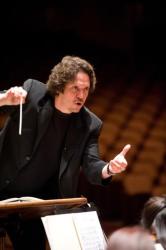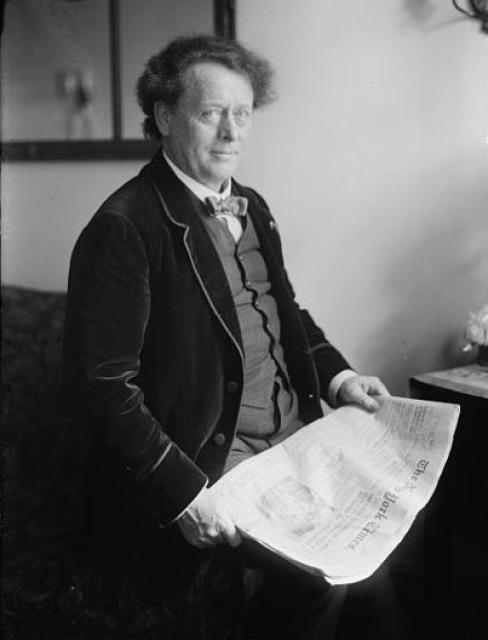
Willem Mengelberg
 Netherlands
Biography of Willem Mengelberg
Willem Mengelberg was a Dutch conductor of German origin. He was born on March 28, 1871, in Utrecht, Netherlands. Mengelberg received his initial musical education in Utrecht, studying piano and organ under the guidance of renowned musicians such as Richard Hol and Isidor Seiss. He later continued his studies at the Cologne Conservatory, where he learned piano from Isidor Seiss and conducting from Franz Wüllner. He also studied organ, solo singing, and composition during his time at the conservatory and graduated with first prizes in conducting, piano, and composition in 1892.
Early Career
After completing his education, Mengelberg began his career as a conductor in Lucerne, Switzerland, where he worked for three years. In 1895, he was recommended by Franz Wüllner to become the conductor of the Concertgebouw Orchestra in Amsterdam, taking over from his predecessor, Willem Kes. Mengelberg's debut with the orchestra was as a soloist in Liszt's First Piano Concerto, and shortly after, he assumed the role of the orchestra's conductor, performing Beethoven's Fifth Symphony.
The Concertgebouw Orchestra
Mengelberg served as the conductor of the Concertgebouw Orchestra for fifty years, from 1895 until 1945. Under his leadership, the orchestra became one of the world's leading ensembles of exceptional caliber. Mengelberg also regularly conducted concerts in Frankfurt and embarked on numerous international tours. He was known for his close collaboration with contemporary composers such as Gustav Mahler, Richard Strauss, Arnold Schoenberg, and Max Reger, actively promoting and championing their compositions in his concerts.
Contributions and Controversy
Mengelberg was highly regarded for his meticulous attention to detail and interpretation of musical works. He sought to highlight the poetic aspects of music and was known for his meticulous rehearsal process. He often consulted with composers, corresponded with them, and made detailed annotations in scores based on their instructions. Richard Strauss dedicated his symphonic poem "Ein Heldenleben" to Mengelberg and his orchestra.
During World War II, Mengelberg conducted concerts in Germany and occupied countries, but he did not support Nazi ideology. However, he faced accusations of collaboration with the Nazis, and in 1945, his performances were banned in the Netherlands. Despite being exonerated of all charges in 1947, the ban on his performances remained in place. Mengelberg spent his final years in Switzerland, where he died on March 21, 1951.
Willem Mengelberg was known for his technical mastery of conducting, his attention to nuance in performances, and his powerful dynamic energy. He made significant contributions to the field of orchestral music and left a lasting impact on the Concertgebouw Orchestra's legacy as one of the world's finest ensembles.