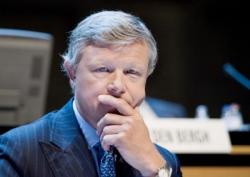
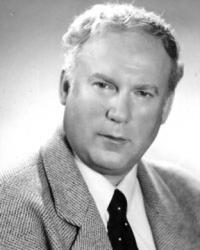
William (Bill) Browder
 USA
USA- Early Life and Education
- Career in Investment Banking
- Founding Hermitage Capital Management
- Growth and Success of Hermitage Capital
- Achievements and Controversies
- Ownership and Growth
- Advocacy for Minority Shareholders
- Conflicts with Russian Authorities
- International Recognition and Influence
- Bar from Entry to Russia and Investigation
- Conflict with the Ministry of Internal Affairs
- Investigation into Tax Fraud and the Death of Sergei Magnitsky
Early Life and Education
William "Bill" Felix Browder was born on April 23, 1964, in Chicago, Illinois (some sources state Princeton, New Jersey). His grandfather was Earl Browder, the leader of the Communist Party USA from 1932 to 1945, who was removed from his position for trying to disband the party and rejecting revolutionary struggle against capitalism. Browder's father, Felix Browder, was born in the USSR to Earl's wife, Raisa Berkman, and later became a mathematician and professor at Rutgers University in New Jersey.
Browder spent his childhood and youth in Chicago and graduated from the University of Chicago in 1985 with an honors degree in economics. He then attended Stanford Graduate School of Business, where he earned an MBA in 1989.
Career in Investment Banking
After graduating, Browder joined Boston Consulting Group, where he focused on investment opportunities in Central and Eastern Europe. During an assignment in Poland after the start of market reforms, Browder invested $4,000 of his savings in a bus factory and earned $40,000 a year later.
Founding Hermitage Capital Management
In 1989, Browder moved to the United Kingdom and later obtained citizenship in 1997, renouncing his American citizenship. There he worked for media magnate Robert Maxwell until Maxwell's death in 1991.
In 1992, Browder joined Salomon Brothers and focused on investing in Russia. Due to the rapid devaluation of the ruble and hasty privatization, foreign companies could make windfall profits by acquiring state-owned assets. Browder claimed to have bought an entire fleet of fishing trawlers in Murmansk for Salomon Brothers for $2.5 million, while their real value was around $1 billion.
Growth and Success of Hermitage Capital
After receiving $25 million to invest in 1992, Browder returned $100 million to the company by 1995. He then decided to start his own business, co-founding the Hermitage Fund investment fund in April 1996 with Lebanese banker Edmond Safra, founder of New York's Republic National Bank.
Hermitage Capital Management (or Hermitage Asset Management) managed the assets of the Hermitage Fund. By 1997, there were effectively two Hermitage funds, Hermitage Fund and Hermitage II (later distinctions were no longer made). The firms were registered in Guernsey, with Browder serving as their managing director.
The funds specialized in investing funds from large institutional investors. In Russia, the fund operated through a number of companies, which according to the Ministry of Internal Affairs (MVD), included OOO "Kameya," OOO "Pythagor Investments," OOO "Parfeninion," OOO "Machaon," OOO "Riland," OOO "Baikal-M," and others. Parfeninion, Riland, and Machaon were controlled by proxy through Cypriot offshore corporations by the HSBC Corporation - one of the world's largest financial and banking groups, founded in 1865 as The Hongkong and Shanghai Banking Corporation.
Achievements and Controversies
Investing the initial $25 million from Safra and private investors in Russian companies, Hermitage Capital increased this amount to $1 billion by early 1998. The fund's major investment targets were oil companies: Hermitage's main profits in 1997 came from shares in YUKOS, Slavneft, Sibneft, and KomiTEK.
However, the company gained notoriety not only for its successful investments but also for its aggressive defense of its interests. In 1997, Vladimir Potanin and Mikhail Prokhorov's Onexim Group attempted to issue additional shares for their company Sidanko, tripling its authorized capital and thus diluting Hermitage Capital Management's two percent (or four percent, according to other sources) stake. The investment fund opposed this move and eventually succeeded in having the issue overturned by the Federal Securities Commission (FKTsB), increasing the value of Hermitage's stake in Sidanko.
The Asian financial crisis in July 1998 led to a 50% decline in Hermitage's investments (from $1 billion to $500 million). Although the fund did not buy any government short-term bonds in 1998, the August default severely impacted Hermitage, whose assets further declined to $125 million.
Ownership and Growth
In 1999, after Safra's death, Browder became the sole owner and CEO of the company. By 2000, its assets had grown back to $450 million. By 2001, the HSBC banking group reportedly became the major owner of Hermitage Fund. In November 2004, HSBC sold its 39.33 percent stake for $3.4 million to a company called Berkeley Advisors Inc. By 2008, Hermitage was referring to itself as an HSBC client and advisor.
Advocacy for Minority Shareholders
Browder continued to defend his interests in major Russian corporations where Hermitage was a minority shareholder, claiming to fight corruption within their management. In 2000, the fund managed to influence the reform plans for RAO "EES."
In 2000, Browder participated in the removal of Rem Vyakhirev as CEO of Gazprom. Together with other minority shareholders of the gas corporation, he demanded his resignation from the state and launched a press campaign exposing the company's opaque gas supply schemes to Europe and withdrawal of assets. Alexei Miller eventually took over as head of the gas concern in 2001.
At the time, Browder stated that he approved of Vladimir Putin's reforms and his fight against the oligarchs. Notably, Browder also welcomed the arrest of Mikhail Khodorkovsky, accusing him of mistreating YUKOS' minority shareholders, though he later claimed that Khodorkovsky had "redeemed" himself in prison.
Conflicts with Russian Authorities
In 2002, Hermitage demanded the resignation of Andrei Kazmin as the head of Sberbank after the bank issued additional shares and sold them on the stock market below market price, preventing minority shareholders, including Hermitage Capital, from purchasing them. Kazmin refused to resign, and the minority shareholders were not granted priority in purchasing the shares through court action.
In 2002, Hermitage filed a lawsuit against auditor PricewaterhouseCoopers regarding the relationship between the gas concern and the company Itera under Vyakhirev, which had previously led minority shareholders of Gazprom to demand his resignation. Despite the scandal, PricewaterhouseCoopers remained the auditor under Gazprom's new management.
In 2004, Hermitage sued Surgutneftegas, co-founded and managed by Vladimir Bogdanov, demanding the redemption of treasury shares held by its subsidiaries, but Browder failed to achieve this goal. Hermitage faced similar conflicts over shares with LUKOIL and Rosneft.
International Recognition and Influence
In 2007, Hermitage Capital's assets were valued at $4 billion, and the company had over 6,000 investors from 30 countries worldwide. Browder was referred to as the largest foreign investor in Russia, and the fund's returns from 1996 to 2004 reached 990 percent.
Bar from Entry to Russia and Investigation
In November 2005, Browder was unexpectedly banned from entering Russia. According to the businessman, his visa was revoked due to his alleged threat to Russia's national security. The media reported that the ban was likely related to his advocacy for the rights of minority shareholders and the process of bringing the controlling stake in Gazprom back under state control.
Until 2007, in Browder's absence, the fund was managed by his director of corporate investigations, Vadim Klyainer, a former member of the committee for reforming RAO "EES Rossii." He sold off virtually all of the company's Russian assets, returning the proceeds to investors.
Conflict with the Ministry of Internal Affairs
Until March 2006, Browder did not publicly acknowledge his ban on entering Russia. At the World Economic Forum in Davos in January 2007, he met and spoke with First Deputy Prime Minister Dmitry Medvedev, asking him to have his visa reinstated. According to Browder, a few weeks later, Lieutenant Colonel Artem Kuznetsov called Hermitage and offered to meet with the fund's management, suggesting that for a successful resolution of the visa issue, they would need to provide him with documents of personal interest. The Hermitage representatives declined this meeting.
In June 2007, searches began at Hermitage and at the audit firm Firestone Duncan, which had been servicing Hermitage since 1996, under the leadership of Jamieson Firestone. The searches were prompted by suspicions of a tax evasion scheme using a complex network of subsidiaries. Documents, computer data, and seals of the Russian organizations of Browder's fund were seized.
According to the investigation, the fund's subsidiaries illegally bought shares in strategic Russian companies, including Gazprom, Surgutneftegas, and Rosneft, through disabled people's societies registered in Kalmykia. Browder stated that the MVD had carried out a raider takeover of three of its subsidiaries, including OOO "Kameya," using the seals and documentation seized during the searches.
Investigation into Tax Fraud and the Death of Sergei Magnitsky
Immediately after the searches in 2007, Firestone Duncan employee Sergei Magnitsky began an independent investigation to protect the interests of the investment fund