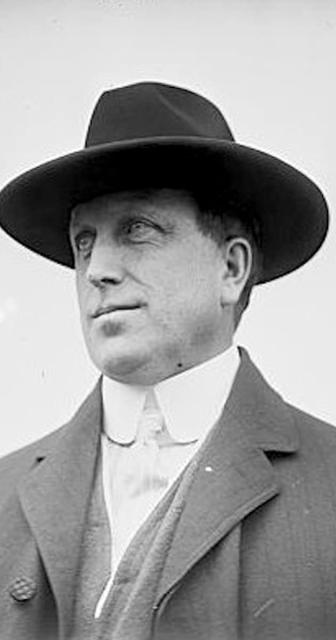
William Hearst
 USA
USABiography of William Hearst
William Randolph Hearst, a newspaper magnate, successfully mastered the basics of the profession while studying at Harvard. As a student, he asked his father to give him a newspaper, and in 1887, at the age of 23, William received The San Francisco Examiner, a small city publication that had been handed down to George Hearst as payment for a gambling debt.
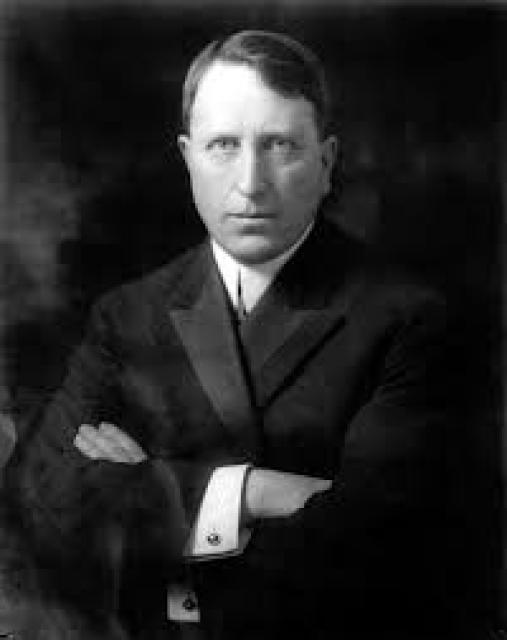
Coming from an affluent Californian family, William Randolph Hearst passed through the school of reporting at Pulitzer's "The New York World" from 1885 to 1887 and thoroughly studied the techniques of "yellow journalism." Upon his return to San Francisco in 1887, Hearst took over the management of The San Francisco Examiner and turned it into an aggressive, hard-hitting, and prosperous newspaper in just three years. Hearst made his own adjustments to the concept of "yellow journalism," disregarding elements such as accuracy and precision in information delivery. According to Hearst, sensation could be created from the most insignificant fact; the main thing was the presentation and meeting the readers' demands.
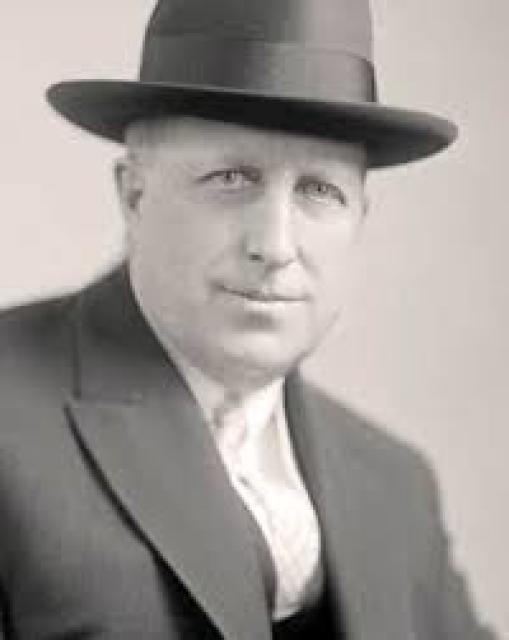
In 1895, Hearst made a breakthrough in the New York newspaper market by acquiring The New York Journal. Hearst lured many leading journalists and artists from Pulitzer's publication, increased sensationalism and entertainment value, and lowered the price of his publication, leading to a sharp increase in the circulation of The New York Journal. In 1896, Hearst managed to collaborate with Richard Outcault, the creator of the first American comic strip. A struggle between Hearst and Pulitzer for the rights to publish the comic strip ensued. Hearst's comic strip was printed entirely in yellow, leading contemporaries to label his journalistic model as "yellow journalism." The term "yellow press" became associated with Hearst's style, who wrote in one of his editorial articles: "The policy of The New York Journal is that attracting attention is just as important as gathering facts; the public craves entertainment much more than just news."
The sensational and entertaining style became dominant in the aesthetics of print publications oriented towards the tastes and needs of the "mass man," a phenomenon analyzed by Spanish philosopher Jose Ortega y Gasset. The fierce competition between Pulitzer and Hearst took on unsightly forms, especially during the Cuban events of 1895-1898. Competing for circulation, The New York Journal and The New York World competed in sensationalizing the news about the Cuban events, neglecting accuracy and reliability in their reporting. They not only detailed the atrocities committed by Spanish troops in Cuba but also interfered in the internal affairs of foreign countries. In 1897, Hearst's newspaper organized the escape of a young Cuban woman accused of treason from a Havana prison, and in early 1898, a stolen private letter from the Spanish ambassador, containing derogatory remarks about American President William McKinley, was published in The New York Journal. The goal of this action was to pressure a president who adopted a pacifist stance to take more decisive actions against Spain.
The mysterious explosion on February 15, 1898, on the American battleship "Maine" in the port of Havana, caused a real frenzy in Hearst's and Pulitzer's newspapers, which were filled with sensational headlines. Pulitzer called for the president to engage in a "swift and fierce" war with Spain. Two weeks after the explosion on the Maine, the circulation of The New York World reached 5 million. Hearst's newspaper also called for armed intervention in Cuba. Although the true causes of the explosion were unclear, the slogan "Remember the Maine!" became the propaganda slogan for war in the United States. The jingoistic campaign launched by these newspapers made the war between the United States and Spain inevitable. Edwin Godkin, the editor of "The Nation" magazine, wrote that "American journalism had never known anything as shameful as the behavior of these two newspapers."
William Hearst knew how to adapt to changing times. He did not stay away from the "muckraking" movement that promised him financial success. For this purpose, he acquired "Cosmopolitan Magazine" and transformed it into a muckraking publication. In 1906, a series of articles in "Cosmopolitan Magazine" shook public opinion in America, exposing corruption in high political circles. Scandalous materials under the collective title "Senate Betrayal," written by D. Phillips, dealt a significant blow to several prominent political figures. Intuition and business acumen prompted Hearst to create a newspaper conglomerate. In 1911, he founded the International News Service, which became one of the leading American news agencies alongside the Associated Press and United Press. By 1922, Hearst's corporation included 20 daily newspapers, 11 Sunday editions, as well as two radio stations, a company producing newsreels, and a film company. By the early 1990s, the Hearst publishing empire included 14 daily newspapers, 30 weekly publications, 20 magazines, 5 television stations, and 7 radio stations, not to mention several book publishers.


