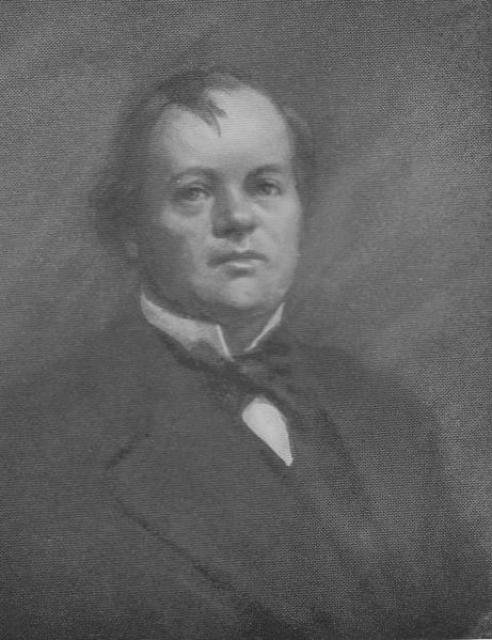
William Palme
 Great Britain
Biography of William Palmer
William Palmer, an English doctor, was convicted of a notorious murder in the 19th century. He was arrested for the murder of Cook. The bodies of Anne and Walter Palmer were exhumed and examined. Although there were not many clues, all of them pointed directly to William. It was considered a difficult task to assemble a fair jury in Staffordshire, so the trial took place at Old Bailey in London. William Shee took over Palmer's defense at the last minute after his previous lawyer fled to France to evade creditors.
William Palmer was born on August 6, 1824, in Rugeley, Staffordshire. He led a rather eccentric life, interrupting his medical education to deal with accusations of theft. Palmer also earned a reputation as a ladies' man. While working at Stafford Infirmary, he was accused of poisoning an acquaintance during an impromptu hospital contest of "who can drink more." Although nothing was proven, there was increased control over the dispensing of free medicines at the hospital. Palmer had a passion for gambling, but luck was not on his side, and he fell into serious debt. Returning to his hometown of Rugeley, Palmer continued his medical practice. He married Ann Thornton on October 7, 1847. Their first son, William Brooks Palmer, was born in 1848 or 1850 and outlived his father, passing away on April 29, 1926.
Series of Suspicious Deaths
Suspicion first fell on William after the death of his mother-in-law, Ann Mary Thornton, on January 18, 1849, who had come to visit her daughter at the Palmer's home. She was 50 years old. Then, on May 10, 1850, Leonard Bladen, a 49-year-old man, died in the Palmer's guesthouse. A series of strange events followed, leading William and Ann to bury four of their infant children: Elizabeth Palmer, who was 2.5 months old, Henry Palmer, who was one month old, Frank Palmer, who died seven hours after birth, and John Palmer, who was only 3-4 days old.
Their elderly uncle, 62-year-old Joseph Bentley, died on October 27, 1852. His death did not raise any suspicions. However, following his death, Ann Palmer, aged 27, also passed away on September 29, 1854. Meanwhile, her husband was having an affair with the maid, Eliza Tharme. Eliza gave birth to William's illegitimate son, Alfred, on June 26 or 27, 1855. All these events did not attract much attention, and it was believed that Ann died of cholera. Between 1853 and 1854, the third cholera pandemic raged in the United Kingdom, resulting in approximately 23,000 deaths from the disease. However, Ann's death brought financial gain to Palmer as she was insured for £13,000. Foresighted Palmer also insured the life of his brother Walter. Walter died suddenly on August 16, 1855, and the insurance company refused to pay. By this time, Palmer was deeply in debt and was blackmailing one of his former mistresses, the daughter of a police officer from Staffordshire.
In November 1855, Palmer twice lost bets on horses at the Shrewsbury races. On both occasions, his companion was John Parsons Cook. Cook won a significant amount by betting on a horse named 'Polar Star' while Palmer had placed his hopes on a different horse. Cook and Palmer celebrated Cook's victory at the "Raven" pub. The next day, Cook felt very ill but dismissed it as a hangover. On November 17, 1855, Cook's condition worsened. Alongside him, Palmer's illegitimate child, Alfred, also looked unwell. The baby died the same day. On November 18, a maid tried the broth prepared for Cook and fell ill. The following day, Palmer traveled to London to collect Cook's winnings from the races. Cook died on November 21, around one o'clock in the morning. On November 26, Cook's body was autopsied, and the idea of deliberate murder was suggested. Suspicions grew when Palmer attempted to bribe several individuals involved in the investigation. The final straw came when it was discovered that shortly before Cook's death, his friend had purchased strychnine.
The Trial and Conviction
Palmer was arrested for Cook's murder. The bodies of Anne and Walter Palmer were exhumed and examined. Although there were not many clues, all of them pointed directly to William. Assembling a fair jury in Staffordshire was considered a difficult task, so the trial took place at Old Bailey in London. William Shee took over Palmer's defense at the last minute after his previous lawyer fled to France to evade creditors. Against all professional conduct and standards, Shee told the jury that he personally believed in his client's innocence. The prosecution team, Alexander Cockburn and John Walter Huddleston, delivered impassioned speeches that left Palmer and his lawyers with no chance. Palmer was found guilty of murder.
On June 14, 1856, Palmer was executed by hanging in Stafford Prison. As the noose was placed around his neck, he reportedly looked at the trapdoor and exclaimed, "Are you sure it's safe?" After Palmer was hanged, his mother is said to have remarked, "They have hanged my saintly Billy." Some researchers believe that there was insufficient evidence to support Palmer's guilt and that the judge, John Campbell, 1st Baron Campbell, acted with bias.
Many influential residents of Rugeley were concerned that their town would forever be associated with the poisoner Palmer. Thus, a local urban legend emerged, claiming that the townspeople had appealed to the Prime Minister to change the town's name. The Prime Minister agreed, but on the condition that the town would be named after him... Palmerston. However, this story is considered to be without foundation.
The phrase "What's your poison?" is believed to be a direct reference to these events.