Willow Rae Porter
 USA
USA- A Little American Girl with I-Cell Disease
- The Remarkable Girl, Willow Ray Porter
- The Cause of the Disease
A Little American Girl with I-Cell Disease
Willow Ray Porter, a delightful 22-month-old girl, is suffering from the extremely rare I-cell disease, with a high probability that she will not live past the age of three. Her desperate mother is doing everything she can to create as many pleasant memories as possible for her little one.

The Remarkable Girl, Willow Ray Porter
Willow Ray Porter has become a victim of a disease that affects only one in a million people. This condition negatively impacts her breathing, heart, digestion, joints, and can ultimately lead to premature death. Only 72 patients with I-cell disease have been recorded worldwide. Willow's mother, 23-year-old Katie Hanson from Seattle, Washington, considers her child a "savior" because doctors discovered her cervical cancer during a fetal ultrasound. The doctors advised Hanson to have an abortion so she could start her own treatment, but she refused to terminate the pregnancy. After giving birth, Hanson successfully had a 7.6 cm tumor removed. Cancer-free, she will forever be grateful to her daughter, who manages to stay happy despite her challenging condition. Katie is determined to do everything she can to ensure Willow never stops smiling. Four months ago, the little one learned to say "mama," which is particularly remarkable as some I-cell disease patients are permanently mute. "When we found out what Willow was suffering from, we were crushed," recalls Katie. "In an instant, our whole world turned upside down, and we began preparing for a life with a diagnosis that imposes so many limitations." "At best, our daughter will live until the age of 10. On average, life expectancy ranges from three to five years, but often even less..." "Among the many issues Willow faces are heart failure, respiratory failure, kidney problems, neurological issues, developmental difficulties, severe hip dysplasia, and much more." "Our daughter's immune response is impaired, which is what kills children with I-cell disease. Cardiac arrest and respiratory failure can occur, and even a common cold can cause death." "If she gets a simple cold, we have to rush her to the hospital and connect her to life support if her lungs suddenly fail." Katie adds, "Our main goal is to provide a comfortable environment for Willow and make her happy, despite all the challenges." "Most children with I-cell disease learn to express themselves with simple sentences, but some cannot speak at all or simply babble. Our daughter continues to amaze me. She has already learned to say 'mama' and 'uh-huh,' which she says when she is excited." "Our focus is on daily activities, and I am grateful for every second spent with Willow. We live without regrets and do not take things for granted." The problems with their daughter began when she was three months old. She started to have difficulty breathing and stopped eating because the food was not reaching her stomach. Last year, Willow spent only 12 days outside the hospital walls. Doctors did everything they could to figure out what was wrong with the tiny patient. Hanson says, "My daughter was eight months old. She was hooked up to a breathing tube and a heart-lung machine. The doctors told me that the last thing they could do was send her genomic DNA for comprehensive testing." "The test, which decodes every single set of genes, usually takes six months, but they identified Willow's I-cell disease (or mucolipidosis II) within two days." Katie adds, "The most noticeable problem caused by the disease is an extremely rare form of dwarfism, which completely halts the development of the skeletal system." Willow stopped growing at around 18 months old. She weighed 7.7 kg and was 68 cm tall, making her look like a 6-7-month-old baby. "Typically, the growth of children with I-cell disease stops at around the age of two," explains Hanson.

The Cause of the Disease
The disease is caused by lysosomes, cellular organelles unable to break down specific fatty substances and complex carbohydrates due to the misdirection of enzymes signaling the degradation process. Inside Willow's cells, macromolecules - oligosaccharides, lipids, and glycosaminoglycans - accumulate in the soft tissues, joints, cartilage, and bone structures, leading to the formation of harmful "intracellular inclusions."

Katie explains, "Lysosomes are supposed to break down harmful substances in the body, but because the enzymes are misdirected and behave hyperactively, these substances accumulate in her tissues throughout her body."

"Our daughter's gums are the area where growth is most evident. Her gums are very thick and rigid, constantly triggering the teething process, which doesn't stop as her teeth keep growing."

"The same thing happens in the joints of her hands, wrists, palms, and knees. This causes discomfort, stiffness, and an enlargement of Willow's liver and spleen."

Due to difficulties in breathing and producing sounds, Willow is starting to learn even the most basic words through sign language. Despite her learned word "mama," she will likely only be able to communicate with simple sentences full of interjections in the future.
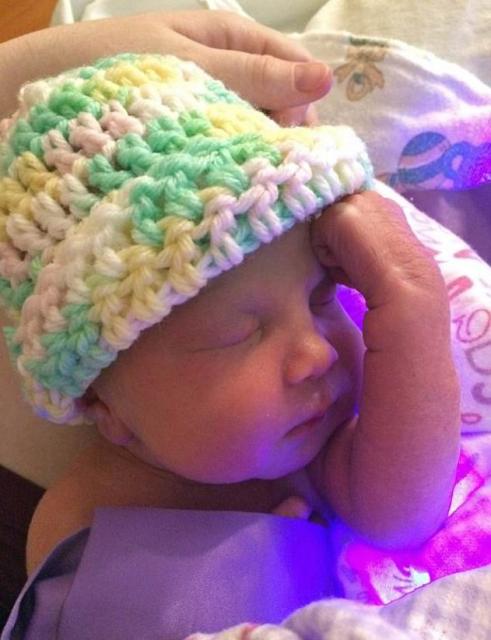
"We only know of two genetic specialists who deal with I-cell disease," says Hanson. "No direct funding comes from the federal government, so we rely on funds created by people whose relatives have I-cell disease..."
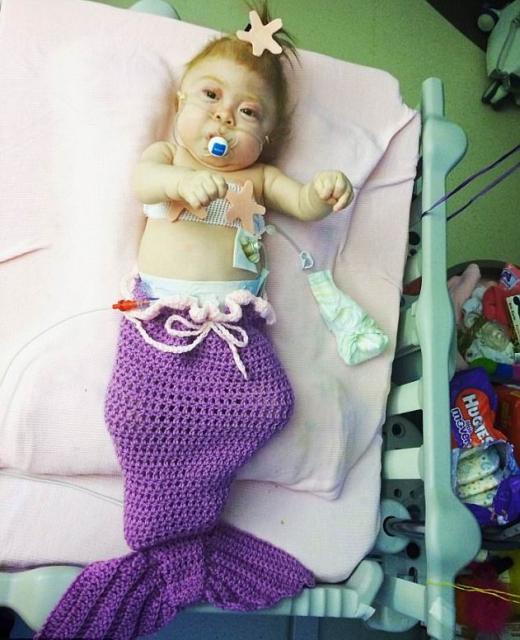
"Due to the lack of funding, there has not been enough research conducted, so there is still no treatment available."
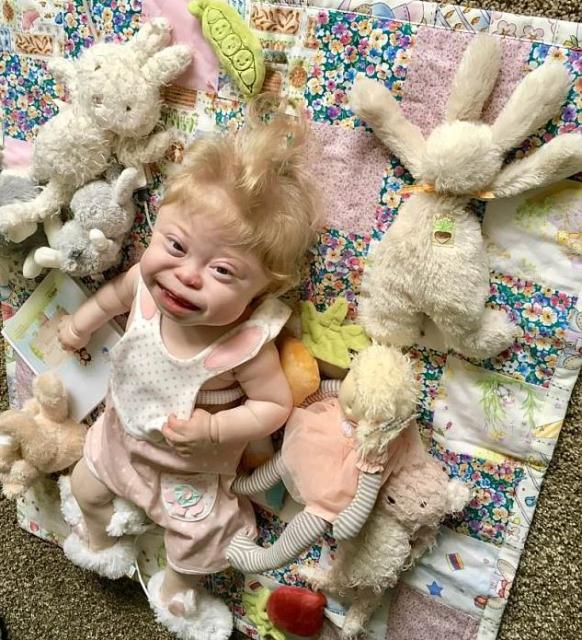
"At this point, it all comes down to keeping Willow alive and comfortable."

There are currently no specially designed programs for children with I-cell disease.

Katie says her daughter is an "angel on earth," a delightful "social butterfly" who loves watching people, talking to them, and always ready to smile at everyone.