Wiro Roermond
- Saint Wiro's Life and Legacy: A Bishop's Journey
- Pilgrimage and Episcopal Consecration
- Missionary Work in the Netherlands
- Abbey of Roermond
- Controversy over the Abbey's Founding
- Death and Veneration
- Legacy and Commemorations
- Feast Days
- Orthodox Pilgrimage
Saint Wiro's Life and Legacy: A Bishop's Journey
Early Life and EducationIn the latter half of the 7th century, Saint Wiro was born in Ireland (or Scotland, according to some sources). He received a comprehensive spiritual and academic upbringing.
Pilgrimage and Episcopal Consecration
As an adult, Wiro embarked on a pilgrimage to Rome with companions. In the eternal city, he was ordained as a bishop.
Missionary Work in the Netherlands
Returning to his homeland, Wiro served as a missionary in Northumbria before continuing his mission along the Lower Maas and Lower Rhine rivers. Tradition suggests that he was a companion of Saint Willibrord, who appointed him Bishop of Utrecht.
Abbey of Roermond
In 706, Wiro initiated the construction of an abbey at the confluence of the Roer River and the Maas. The abbey became a center for missionary work, spreading Christianity among the local population. The land for the monastery was donated by Pepin of Herstal. Today, the site is the village of Sint Odilienberg.
Controversy over the Abbey's Founding
There are two competing theories regarding the date of the abbey's founding. One view holds that Saint Wiro was a companion of Saint Boniface, suggesting a founding in the 740s. However, this is disputed because Wiro's first documented life states that the land was gifted by Pepin of Herstal, who died in 714. Additionally, Willibrord and his companions focused their missionary activities west of the Rhine, while Boniface primarily evangelized east of the river.
Death and Veneration
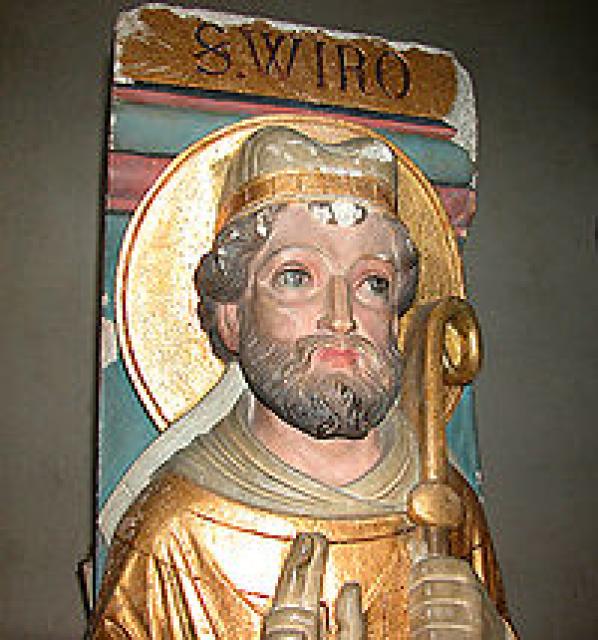
Saint Wiro's death date is unknown, but his feast day is celebrated on May 8th. His relics were moved to Roermond in 1361 and returned to Sint Odilienberg in 1881, where they remain to this day. His head is enshrined in Utrecht.
Legacy and Commemorations
Numerous churches and chapels in the Netherlands are dedicated to Saint Wiro, including the cathedral in Sint Odilienberg, named after him and his companions Plechelmus and Otgerus. Streets in Sint Odilienberg also bear his name.
Feast Days
Saint Wiro is celebrated by both the Catholic and Orthodox churches. Catholics commemorate him on May 8th, while Orthodox Christians observe his feast on May 21st. Roermond celebrates a special feast on May 11th.
Orthodox Pilgrimage
On May 21st, 2009, a group of Orthodox pilgrims from the Russian Orthodox Church's Düsseldorf parish prayed at Saint Wiro's relics in Sint Odilienberg, marking the first time Orthodox pilgrims had venerated his remains.