Wu Chien-Shiung
 USA
USA- Jianxiong Wu: A Trailblazing Physicist and Manhattan Project Pioneer
- Career in the United States
- Contributions to the Manhattan Project
- Verifying the Violation of Parity Conservation
- Legacy and Recognition
Jianxiong Wu: A Trailblazing Physicist and Manhattan Project Pioneer
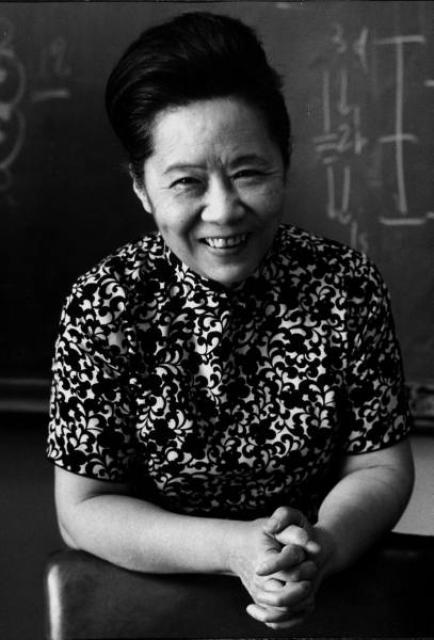
Early Life and EducationJianxiong Wu was born in Taicang, China, in 1912. Her father, a strong advocate for gender equality, founded a school specifically for women. Wu began her studies at a pedagogical school at the age of 11 and subsequently enrolled at National Central University in 1929.

After graduating, Wu pursued advanced studies in physics at the Academia Sinica. Aspiring to expand her knowledge, she applied to universities abroad and received an acceptance letter from the University of Michigan. In 1936, she traveled to the United States with her friend, chemist Dong Ruofen.
Career in the United States
At the University of Michigan, Wu was mentored by Nobel laureate Ernest O. Lawrence and earned her doctorate in physics in 1940. She married Luke Chia-Liu Yuan in 1942 and moved to the East Coast, where she held positions at Smith College and Princeton University.
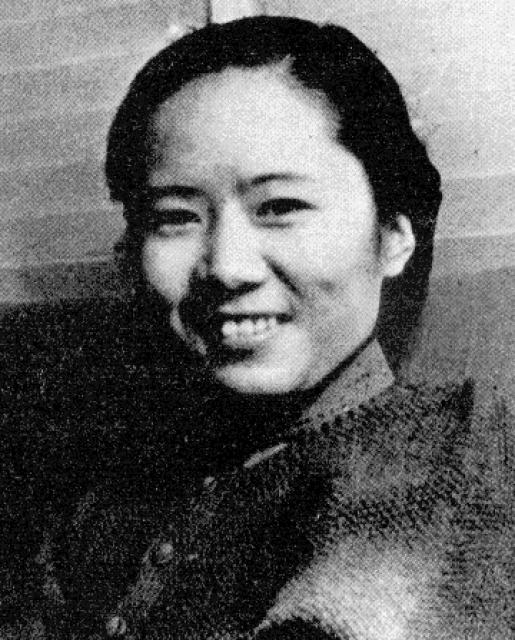
In 1944, Wu became the first female faculty member in Princeton's physics department. She later joined Columbia University, where she remained until 1980.
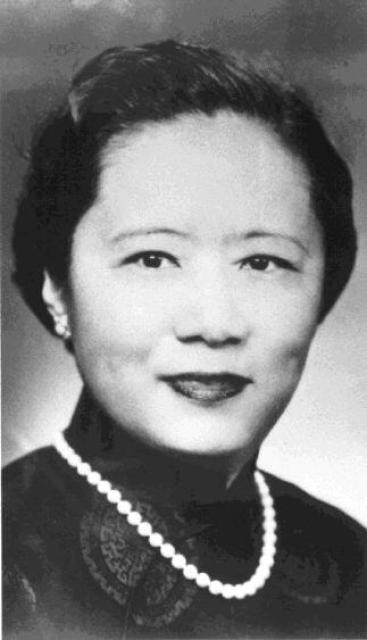
Contributions to the Manhattan Project
Wu played a significant role in the Manhattan Project. She developed a method for separating uranium isotopes, which was utilized at the facility in Oak Ridge, Tennessee. Additionally, she made vital improvements to the Geiger counter.
Verifying the Violation of Parity Conservation
In the mid-1950s, Wu collaborated with Chinese physicists Tsung-Dao Lee and Chen Ning Yang to investigate the law of parity conservation. Their theoretical work hinted that the law did not hold for weak nuclear interactions.
Wu conducted an experiment that conclusively demonstrated the violation of parity conservation for weak interactions. Her findings were a groundbreaking contribution to physics and played a crucial role in the development of the Standard Model.
Legacy and Recognition
Throughout her career, Wu made significant contributions to the field of physics. She received numerous awards and honors, including the National Medal of Science and the Wolf Prize in Physics.
Wu passed away in 1997, leaving behind a legacy as a pioneering physicist and an advocate for women in science. Her work paved the way for generations of scientists to come and continues to inspire countless students around the world.