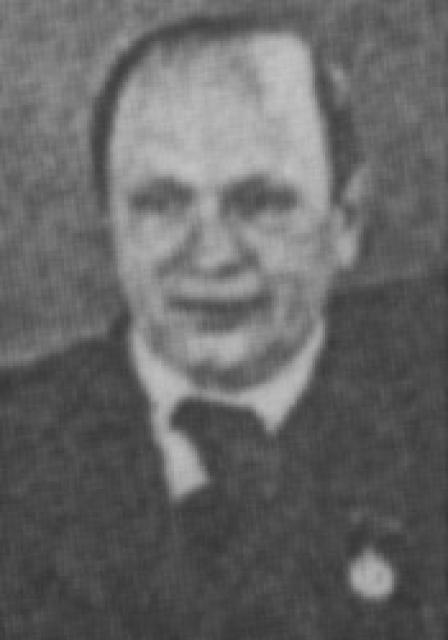
Yacov Kukles
- Early Training in Kharkiv and Berlin
- The Bolshoi and an Orchestra Without a Conductor
- Theater, Teaching, and Later Years
- Musical Legacy
Yakov Kukles made the oboe and English horn his voice across several musical worlds: the opera orchestra, an experimental ensemble without a conductor, and Moscow’s State Jewish Theater. Praised as one of the finest English-horn players of his generation, he was also a conductor and teacher whose career spanned the late Russian Empire and the Soviet period.
Early Training in Kharkiv and Berlin
Kukles was born in Kharkiv on February 24, 1876. He began studying the oboe as a child and attended the Kharkiv Music School from 1890 to 1898, where his teacher was H. A. Heck. During his student years, he also performed with the Ukrainian theatrical troupe of Marko Kropyvnytsky. He continued his training at the Berlin Conservatory in 1898–99.
His early professional work was rooted in his home city: he played with the Kharkiv Drama Theater orchestra and then became a soloist with the Kharkiv Opera’s symphony orchestra. The combination of disciplined orchestral playing and a distinctive lyrical tone would become a hallmark of his musicianship.
The Bolshoi and an Orchestra Without a Conductor
In 1906, Kukles moved to Moscow and joined the Bolshoi Theatre’s symphony orchestra as its first oboist, a position he held until 1922. He then became part of Persimfans, the First Symphony Ensemble without a Conductor, an ambitious collective that performed from 1922 to 1932. Its musicians shaped interpretations through discussion and collaboration rather than following a single conductor, and Kukles participated throughout the ensemble’s existence.
His English-horn playing earned particular recognition. The instrument’s warm, singing sound gave him room for expressive, vocal phrasing, and the St. Petersburg Conservatory later described him as one of the leading performers on the instrument.
Theater, Teaching, and Later Years
Kukles also built a lasting connection with Moscow’s State Jewish Theater (GOSET). From 1922 until at least 1943, he served as its conductor, and in 1928 he toured Europe with the company. He conducted programs of Jewish and klezmer music with both the theater and the Moscow State Philharmonic, some of which survive in recordings.
During the 1942–43 academic year, he taught oboe at the Leningrad Conservatory while it was evacuated to Tashkent. In 1936, he received the title Honored Artist of the Russian Soviet Federative Socialist Republic. Records of his whereabouts and work after 1943 have not been found; the conservatory gives his year of death as 1964.
Musical Legacy
Kukles’s career connected regional opera, Moscow’s leading orchestra, a landmark experimental ensemble, and Jewish theatrical music. Remembered for the expressive quality of his English-horn playing, he left a musical legacy that crossed institutions and traditions, even as the details of his final years remain obscure.


