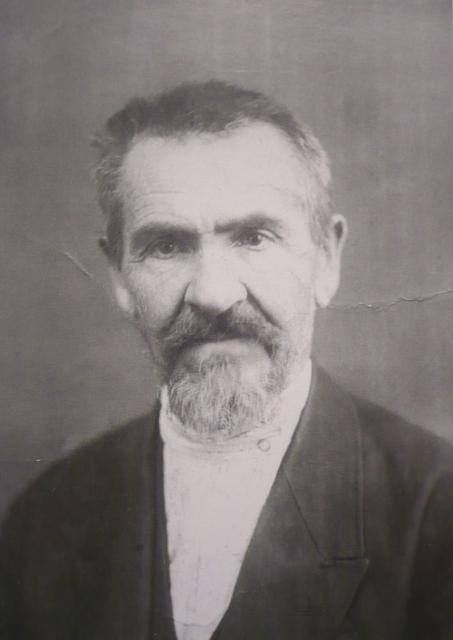
Yakov Veber
- Early Life and Artistic Beginnings
- 1886: First Painting and Career Struggles
- 1895: Journey to Saratov
- Artistic Development and Influence
- 1899: Penza Art School
- 1903: St. Petersburg and Imperial Academy of Arts
- Return to the Homeland
- 1917: Painting the Volga
- Political Upheaval and Repression
- 1937: Repression and Imprisonment
- Late Life and Legacy
Early Life and Artistic Beginnings
1870: Birth and UpbringingJacob Weber was born in 1870 in Golaya Karamych, a German colony in the Saratov province of Russia. His family was large but poor, and Weber's early life was shaped by the modest circumstances of his surroundings.
1886: First Painting and Career Struggles
At the age of 16, Weber painted his first artwork, but his father initially discouraged him from pursuing art as a viable career, favoring more "practical" trades such as carpentry or locksmithing. Undeterred, Weber persisted in his artistic aspirations.
1895: Journey to Saratov
Despite resistance from his family and village council, Weber left home at 25 to study art in Saratov. He found work as a copyist at the A.N. Radishchev Art Museum, but his ambition soon outgrew this routine position.
Artistic Development and Influence
1898: Moscow and ParisWith the encouragement of local artists, Weber moved to Moscow and worked briefly under Konstantin Korovina. Korovina recognized Weber's potential and recommended he travel to Paris, the "Mecca of artists." However, financial constraints prevented this trip.
1899: Penza Art School
Weber enrolled in the Penza Art School under the guidance of K.A. Savitsky. Here, he honed his skills and created notable works like "Blizzard. Horse under the Shed."
1903: St. Petersburg and Imperial Academy of Arts
Weber's talent earned him admission to the renowned Imperial Academy of Arts in St. Petersburg, where he studied under A.A. Kiselev. During this period, he participated in numerous exhibitions and earned recognition and awards for his Volga landscapes.
Return to the Homeland
1915: Settlement in ScherbakovkaAfter completing his studies, Weber returned to his birthplace and settled in the village of Scherbakovka. Despite an invitation from the Academy of Arts to head the Department of Landscape Painting, Weber preferred the quiet life and connection with his community.
1917: Painting the Volga
Weber taught drawing and literacy to local youth, and his artwork continued to capture the essence of the Volga River, depicting it as the "main street of Russia." Scherbakovka became a hub for artists during the summer months, but their influence did not alter Weber's unique style.
Political Upheaval and Repression
1921: Arrest and ReleaseAs a Communist, Weber was captured by Pyotr Pyatakov's rebel forces in 1921. He narrowly escaped execution thanks to the intervention of his students and villagers.
1937: Repression and Imprisonment
In 1937, Weber was arrested on charges of Tolstoyism and sent to a labor camp. He endured severe abuse and torture, including the removal of his gold teeth.
Late Life and Legacy
Weber remained steadfast in his belief in the freedom of artistic expression. Despite his hardships, he continued to create art until his death in 1958 in the town of Tsivilsk. His legacy lives on through his works, which capture both the beauty of the Volga River and the challenges faced by artists in tumultuous times.