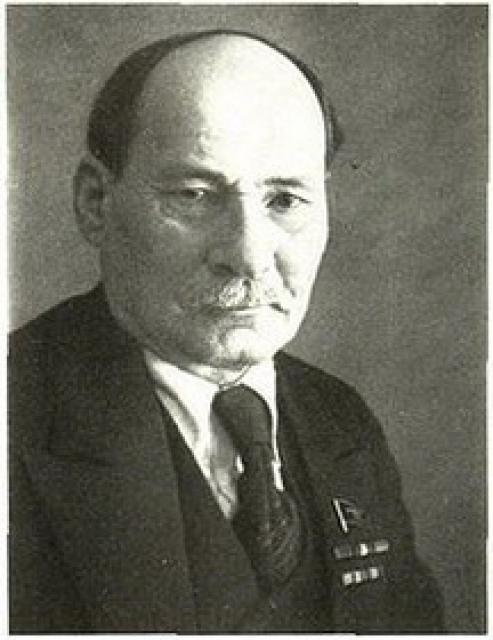
Yakub Kolas
 Belarus
- Yakub Kolas: A Belarusian Literary Luminary
- Literary Beginnings
- Revolution and War
- Post-War Accomplishments
- Literary Legacy
- Awards and Recognition
- Impact
Yakub Kolas: A Belarusian Literary Luminary
Early Life and EducationYakub Kolas (born Mihas Kastsyusovich Mitskevich) was born in the village of Akinčycy in 1882 into a family of foresters. After graduating from primary school, he attended the Nyasvizh Teachers' Seminary in 1902 and later worked as a teacher in the Pinsk region.
Literary Beginnings
Kolas's literary career began in 1906 with the publication of his poem "Our Native Land" in the Belarusian newspaper "Our Share." His early works, such as the poetry collections "Songs of Captivity" (1908) and "Songs of Sorrow" (1910), expressed the struggles and aspirations of the Belarusian peasantry.
Revolution and War
In response to his involvement in organizing an illegal teachers' congress, Kolas was imprisoned from 1908 to 1911. During and after the Russian Revolution and Civil War, he witnessed firsthand the hardships faced by the Belarusian people, which he depicted in his works "In the Polesie Wilderness" (1922) and "The Quagmire" (1933).
Post-War Accomplishments
In the post-war period, Kolas emerged as a prolific author and scholar. He played a significant role in compiling the "Russian-Belarusian Dictionary" (1953) and was elected vice-president of the Academy of Sciences of the Belarusian SSR in 1929. His works continued to explore Belarusian history, culture, and the human condition.
Literary Legacy
Kolas is widely regarded as one of the founders of modern Belarusian literature. His trilogy "At the Crossroads" (1921-1954) is considered a masterpiece of Belarusian prose, depicting the complexities of pre-revolutionary life in Belarus. His poems, such as "Let's Take Revenge" (1942) and "Voice of the Land" (1943), celebrated the resilience and sacrifice of the Belarusian people during World War II.
Awards and Recognition
In recognition of his outstanding literary achievements, Kolas received the Stalin Prize in 1946 and 1949. Numerous streets, squares, institutions, and monuments in Belarus bear his name. The Yakub Kolas Literary and Memorial Museum preserves his legacy.
Impact
Yakub Kolas's writings have played a pivotal role in shaping Belarusian cultural identity and inspiring generations of Belarusian writers. His works continue to be widely read and studied today, serving as a testament to the enduring power of his art.


