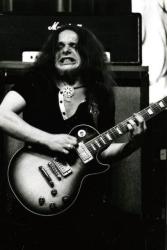
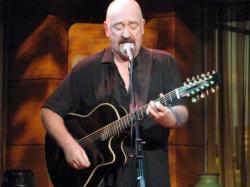
Yan Akkerman
 Netherlands
Biography of Jan Akkerman
Jan Akkerman, a Dutch guitarist, began his musical career in the band Brainbox and in 1970 became a member of the group Focus, with whom he gained fame.
Early Career
Akkerman started his musical journey in 1958 as part of the Amsterdam collective, Johnny And The Cellar Rockers. Although the band only enjoyed limited popularity in their home country, Akkerman and former drummer Pierre Van Der Linden formed the instrumental group The Hunters in the 1960s. The musical style of The Hunters was clearly influenced by The Shadows.
Akkerman spent five years studying at the Amsterdam Music Academy, graduating as a master with influences from classical and antique music, contemporary pop, Latin rhythms, and the works of Frank Zappa, whom Akkerman considers his main teacher.
Brainbox and Focus
After graduating from the music academy, Akkerman formed the hard rock group Brainbox, which included Bert Ruiter on bass guitar, Pierre Van Der Linden on drums, and Kaz Lux on vocals. The group released their only album, "Brainbox," in 1969. Akkerman simultaneously began rehearsing with new musicians for a project that would eventually become Focus.
With the release of their album "In And Out Of Focus" in 1971, Akkerman invited Van Der Linden to join the band, along with Thijs Van Leer and Cyril Havermans. Focus quickly gained success in Europe, attributed to Akkerman's innate sense of improvisation and his remarkable arranging skills. Akkerman's guitar solos during this period, while part of Focus, continue to be included in the essential training program for musicians, such as at Berklee.
Solo Career
Akkerman also pursued a solo career, which, to the surprise of many, developed somewhat uncertainly. His debut solo album, "Profile," achieved some success and consisted of musical sketches he created between Brainbox and Focus. The orchestration for another album, "Tabernakel," was done by Professor George Flynn from the music department of Columbia University. The inclusion of renowned musicians such as Tim Bogart and Carmine Appice attracted professionals who highly praised the album. However, the fans of Focus and the general public did not embrace this particular work by Akkerman.
In March 1976, feeling that his colleagues were leaning towards lighter and more "concrete" music, Akkerman left Focus. He intended to engage in theoretical and studio work with vocalist Lux, but their experiments eventually led to another project, which was released in 1977 under the title "Eli." During this period, Akkerman developed a love for jazz, which is evident in one of his brightest albums, "Aranjuez" from 1978, and in his 1979 live compilation.
Later Career
In the 1980s and 1990s, Akkerman's creativity took on a specific character. His albums (later CDs) were released only in his home country, with very rare and minimal reissues in the United States and the United Kingdom. The same fate befell Focus's later albums. Although the band reunited several times in the 1980s, Akkerman's work with the band Forcefield, which included Ray Fenwick from the Spencer Davis Group and the renowned drummer Cozy Powell, was promptly released and achieved success in European jazz circles. These albums include "The Talisman" and "To Oz And Back." Akkerman's solo album "The Noise Of Art" from 1990, prepared with the assistance of the record company IRS, attracted interest from Americans. However, his US tour was canceled, and currently, Akkerman is once again engaged in studio experiments with sound.