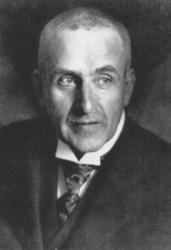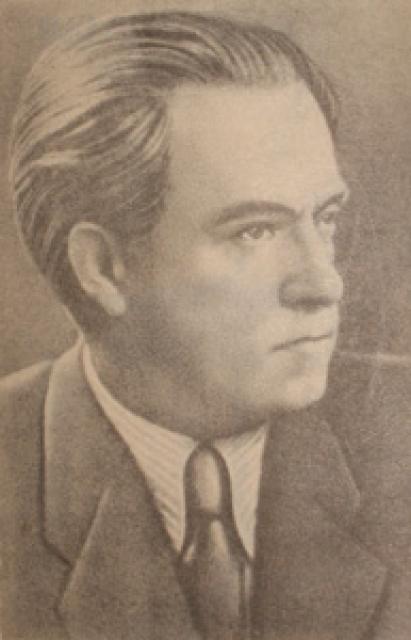
Yaroslav Galan
 Ukraine
- Biography of Yaroslav Halan
- Literary Career
- Political Persecution and Activism
- World War II and Post-War Period
- Assassination and Legacy
Biography of Yaroslav Halan
Yaroslav Halan was a Ukrainian Soviet writer, playwright, and journalist. He was born into a civil servant family and received his education at the gymnasium in Peremyshl and the Higher Commercial School in Trieste, Italy. From 1923 to 1928, he studied at the University of Vienna and the University of Krakow. During his student years, he became involved in the leftist movement and joined the Communist Party of Western Ukraine (KPUZ) in 1924. He actively participated in underground activities and collaborated with the magazine "Okna".
Literary Career
In the 1920s, Yaroslav Halan began his creative work and became one of the organizers of the Ukrainian proletarian writers' group "Gorno". In 1927, he completed his first significant play, "Don Quixote from Etengheim". His comedy "99%" (1930), which was first staged by the semi-legal Lviv Workers' Theater, exposed the venality of nationalist and chauvinistic parties. The themes of class struggle and condemnation of national segregation were highlighted in his plays "Cargo" (1930) and "Cell" (1932), which called for unity and class solidarity among Ukrainian, Polish, and Jewish proletariat.
Political Persecution and Activism
Due to his political stance, Yaroslav Halan faced persecution and imprisonment in 1934 and 1937. He was also one of the organizers of the anti-fascist congress of cultural figures in Lviv in 1936. Additionally, he took part in the largest political demonstration on April 16, 1936, in Lviv, which was brutally suppressed by the Polish police. Halan dedicated his short story "Golden Arch" to the memory of his fallen comrades.
World War II and Post-War Period
After the annexation of Western Ukraine and Western Belarus to the USSR in September 1939, Yaroslav Halan contributed to Western Ukrainian and Soviet press, writing essays and stories about the changes in the reunited western regions of the Ukrainian SSR. During the Great Patriotic War (1941-1945), he worked for front-line newspapers and radio stations. In 1943, he published a collection of war-related works titled "Front on Air". In the post-war years, Halan criticized Ukrainian nationalists (Banderites, Melnykites, Bulbovtsi) as collaborators of the Nazi occupiers. He represented the Soviet press at the Nuremberg Trials in 1946 as a correspondent for "Sovetskaya Ukraine".
Assassination and Legacy
Yaroslav Halan tragically died on October 24, 1949, in his office at his apartment on Gvardeyska Street in Lviv. He was brutally attacked with an axe, receiving eleven blows. His murder was carried out by Ukrainian nationalists Mikhail Stakhur and Ilariy Lukashevich, associated with the OUN (Organization of Ukrainian Nationalists), shortly after the publication of his anti-clerical satire "I Spit on the Pope!" as a response to his excommunication by Pope Pius XII. The assassination of Halan was used as a pretext for tightening measures against the Ukrainian Insurgent Army, which continued armed resistance against Soviet rule.
Yaroslav Halan was posthumously awarded the Order of Honor and the Stalin Prize of the second degree in 1952 for his pamphlets from the collection "Selected Works" (1951). In 1973, a film titled "Until the Last Minute" was made about his life, starring Vladislav Dvorzhetsky. In Kharkiv, a street was named in honor of Yaroslav Halan. However, after Ukraine's independence, a monument dedicated to him in Lviv was demolished, and his memorial museum was closed. It was later replaced by a literature museum.