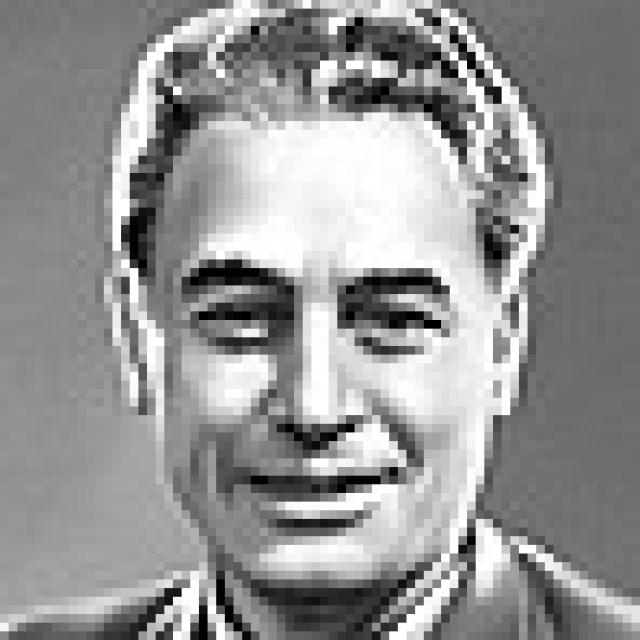
Yoris Ivens
 Netherlands
Biography of Joris Ivens
Joris Ivens (18.11.1898 - 28.06.1989) was a renowned Dutch filmmaker and cinematographer. He gained recognition for his documentary film "Rain" (Regen) in 1929, which showcased his inclination towards capturing the reality through a documentary aesthetic, reminiscent of the French Avant-Garde. He also directed other notable films like "The Bridge" (De Brug, 1928) and "I - Film" (Ik - Film, 1929).
Inspired by his three-month stay in revolutionary Russia, invited by Vsevolod Pudovkin, Ivens became a committed communist for many years. His films during this period, such as "Song of Heroes" (Pesn O Geroyazh, 1932) and "The Spanish Earth" (1937), were strongly influenced by the political events of the time.
During World War II, Ivens lived in the United States and edited films about the fight against fascism, including "Our Russian Front" (1941) and "Know Your Enemy: Japan" (1945). He also made a film about the struggle for independence in Indonesia titled "Indonesia Calling" (1945), which expressed solidarity with the Indonesian labor movement.
In the later years of his career, Ivens actively collaborated with the peace movement, both as a citizen and a filmmaker. He directed films about Eastern Europe, such as "The First Years" (Peirwsze Lata, 1947), and the World Peace Congress in Warsaw, titled "Peace Will Conquer the World" (Pokoj Zwyciezy Swiat, 1950). He also documented the World Youth and Student Festival in Berlin with the film "We Want Peace!" (Wyscig Pokoju Warsawa-Berlin-Praga, 1952).
Ivens received international recognition for his work and was awarded the International Peace Prize in 1955 and the International Lenin Prize in 1958. His film "The Seine Meets Paris" (La Seine A Rencontre Paris, 1957) was particularly celebrated at the Cannes Film Festival for its expressive montage and the inclusion of poems by Jacques Prevert.
In addition to being a filmmaker, Ivens was a dedicated advocate of documentary filmmaking. He gave lectures in the United States in the 1930s and taught at film schools in Poland, East Germany, China, and Italy. In the 1960s, he directed films in Italy and Mali, and then focused on capturing the social and political events of the time, such as the Cuban Revolution in "Armed People" (Pueblo Armado, 1961) and the Vietnam War in "The Sky Above, the Mud Below" (Le Ciel, La Terre, 1965).
Towards the end of his career, Ivens worked extensively in China. His final film, "A Tale of the Wind" (Une Histoire De Vent), was also shot in China in 1988, with his active involvement. Throughout his career, Joris Ivens made significant contributions to the art of documentary filmmaking and left a lasting impact on the industry.


