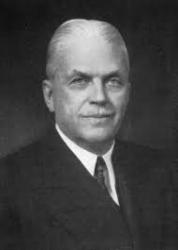
Yuriy Kos
- Early Life and Education
- Studies in the Russian Empire
- Exiled and Travels
- Return to Russia
- Scientific Work and Arrest
- Exile and Later Years
- Legacy
Early Life and Education
Yuri Ivanovich Kos was born in the Russian Empire to Slovenian commercialist Ivan Osipovich Kos and Swedish Veri Karlovna Korn. He developed a keen interest in botany and zoology from a young age.
Studies in the Russian Empire
Kos enrolled in the Imperial Nikolaevskaya Tsarskoye Selo Gymnasium in 1899 and graduated in 1908. He joined the biological department of St. Petersburg University in 1908 but was soon arrested and imprisoned for his involvement in revolutionary activities.
Exiled and Travels
In 1910, Kos was exiled to Austria due to his foreign citizenship. He enrolled in Leipzig University in Germany and later transferred to the University of Oslo in Norway. During his time abroad, he collected extensive plant and butterfly specimens while traveling through Europe, the Middle East, and Africa.
Return to Russia
After the February Revolution in 1917, Kos returned to Russia and taught in schools until 1930. He also published popular science articles and a poetry collection titled "Flowers of Sorrow."
Scientific Work and Arrest
In 1930, Kos joined the All-Union Institute of Plant Industry (VIR). He headed its outpost in Tsarskoye Selo and established a local arboretum. His wide-ranging interests drew the attention of the secret police, and he was arrested in 1933 for alleged espionage and other crimes.
Exile and Later Years
After spending two months in prison, Kos was restricted from living in certain urban areas and worked as a dendrologist in the provinces. In the late 1930s, he moved to the Caucasus region, where he held various positions related to botany and horticulture.
Legacy
Kos's contributions to botany, ecology, and literature are still recognized today. His writings on topics such as the origin of humans and medicinal plants continue to inform and inspire researchers and enthusiasts alike.