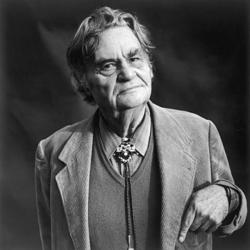
Yves Gingras
 Canada
- Distinguished Career Highlights
- Research and Affiliations
- Awards and Recognition
- Current Research Interests
- Methodological Approach
- Critique of Bruno Latour and Michel Callon
- Conclusion
Yves Gingras: A Francophone Canadian Historian and Sociologist of Science
Yves Gingras is a renowned Francophone Canadian historian and sociologist of science. Having completed his Master's degree in Physics from Laval University, he earned his Doctorate from the University of Montreal in 1984, specializing in the History and Sociopolitics of Science. His doctoral thesis, "Les physiciens au Canada: genèse d'un groupe social, 1850-1950" (published in English as "Origins of Scientific Research in Canada: A Case Study of the Physicists"), was a significant contribution to the field.
Distinguished Career Highlights
Following his doctorate, Gingras held a postdoctoral fellowship in the History of Science at Harvard University from 1984 to 1986. He received a Dibner Fellowship at the Dibner Institute for the History of Science and Technology at MIT in 2000. He has held numerous guest professorships at French universities and is an affiliated professor at the University of Toronto's Institute for History and Philosophy of Science and Technology. From 1986 until the present day, Gingras has served as a professor at the University of Quebec in Montreal (UQAM), primarily in the Department of History since 1989.
Research and Affiliations
Gingras has been a member of the Centre for Research on Industrial and Technological Development (CREDIT) since 1986. He founded the Interuniversity Research Centre on Science and Technology (CIRST) and played a key role in establishing the Observatory for Science and Technology (OST) in 1997, which focuses on the evaluation of science, technology, and innovation. From 2001 to 2005, Gingras served as the director of CIRST before devoting his efforts to the Canadian Research Chair in History and Sociology of Science (with a mandate expiring in 2010).
Awards and Recognition
Gingras's contributions to the field have been widely recognized. He received the Michel-Brunet Prize from the French Institute of North American History in 1988 for his book "Histoire des sciences au Québec" (co-authored with Luc Chartrand and Raymond Duchesne). In 2001, he was awarded the Ivan Slade Prize from the British Society for the History of Science for his work "Les conséquences sociales et épistémologiques de la mathématisation de la physique." In 2005, he received the Gérard-Parizeau Prize for "the legacy of originality and public outreach in opening up the vast and difficult field of the history of science." Additionally, he was honored with the Jacques-Rousseau Prize from the Francophone Association for the Advancement of Knowledge (ACFAS) in 2007 for his innovation and development of science.
Current Research Interests
Gingras's current research interests include discipline formation, the transformation of universities since 1700, and the mathematization of the sciences.
Methodological Approach
Gingras's research is informed by a strong methodological foundation rooted in natural science. He believes that scientific explanations should be based on physical laws and principles. He regards social science as a form of total explanation that attempts to describe the universe's mechanisms and interactions.
Critique of Bruno Latour and Michel Callon
Gingras has been critical of the work of Bruno Latour and Michel Callon, particularly their assertion that social and technical factors are indistinguishable in the analysis of scientific development. He argues that their methodological claims are not reflected in their actual research practices and that they rely excessively on vague metaphors and jargon. He contends that social and technical factors should be treated as distinct entities with different modes of interaction.
Conclusion
Yves Gingras is a leading figure in the field of history and sociology of science. His rigorous approach, innovative research, and thought-provoking critiques have challenged conventional wisdom and advanced our understanding of the complex dynamics that shape scientific development. Through his extensive writings, academic affiliations, and influence on the discipline, he continues to inspire and shape the future of scientific inquiry in the 21st century.