Zacchaeus
- A tax collector in Jericho
- An unexpected welcome
- Meaning and later tradition
- A small figure with an enduring story
Zacchaeus is a memorable figure in the Gospel of Luke, where a brief encounter in Jericho becomes a story about welcome, repentance, and the use of wealth. A wealthy chief tax collector, he is eager to see Jesus but finds himself blocked by the crowd. His solution—a climb into a tree—leads to an unexpected invitation that changes the direction of his life.
A tax collector in Jericho
Luke introduces Zacchaeus as a chief tax collector and a rich man. In Roman-ruled Judea, tax collectors worked within a system that many people viewed with suspicion, both because they served the occupying power and because the collection of taxes could involve exploitation. As a senior collector, Zacchaeus held a prominent position in Jericho, an important town on the route to Jerusalem.
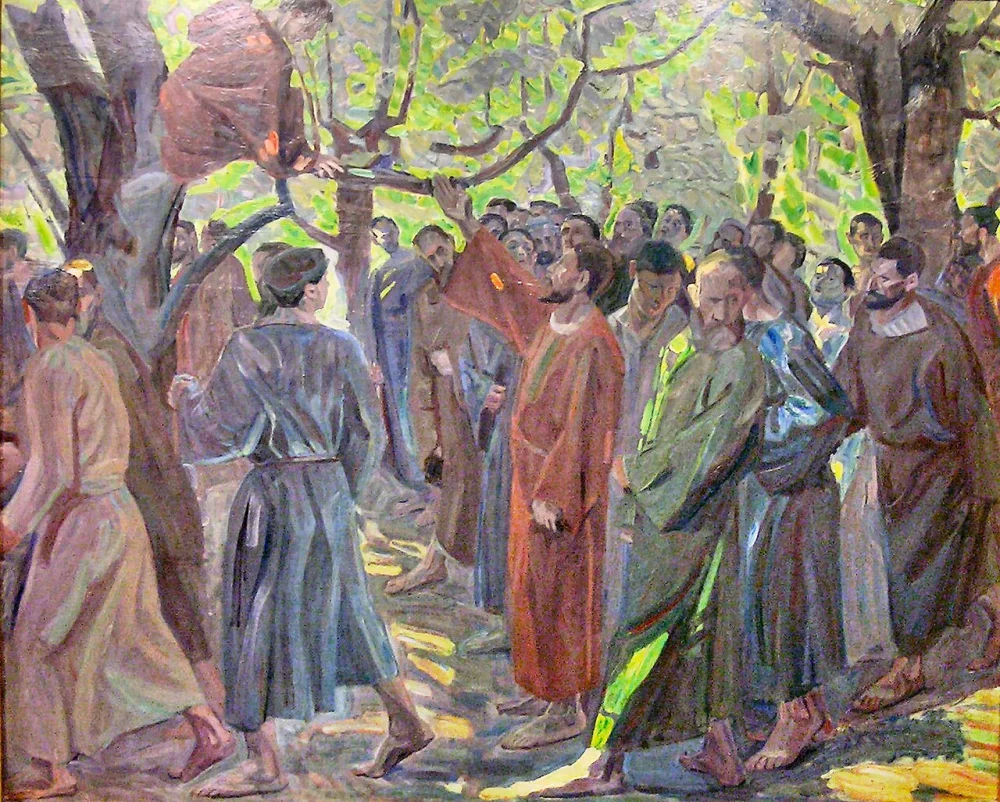
When Jesus passes through the city, Zacchaeus wants to see him but cannot get a clear view through the crowd. Luke adds that he is short, so he runs ahead and climbs a sycamore-fig tree. The scene is strikingly physical: a wealthy official scrambles above the crowd, determined not to miss the moment.
An unexpected welcome
Jesus notices Zacchaeus and tells him to come down, saying that he will stay at his house. The choice surprises the crowd, who grumble that Jesus has gone to the home of a sinner. But the story turns on hospitality rather than exclusion: Jesus publicly addresses Zacchaeus and accepts his welcome.
In response, Zacchaeus says he will give half his possessions to the poor and repay fourfold anyone he has defrauded. Jesus then declares that salvation has come to the house and describes the encounter as a mission to seek and save the lost. The passage presents generosity and restitution as visible signs of a transformed relationship with wealth and community.
Meaning and later tradition
The story appears only in Luke’s Gospel and reflects themes central to that book: concern for the poor, the dangers of wealth, and the possibility of change for people treated as outsiders. Zacchaeus is not simply forgiven in private; his response addresses the material harm associated with his work and promises repair.
Later Christian tradition sometimes identifies Zacchaeus as a companion of the apostle Peter and a bishop of Caesarea, but this claim is not supported by the Gospel account and is generally treated as legend. The biblical narrative itself gives no further details about his life.
A small figure with an enduring story
Zacchaeus’s appearance in the Gospel is brief, but his story has traveled widely through sermons, art, music, and children’s teaching. The image of a man climbing a tree remains instantly recognizable, while the deeper force of the passage lies in the welcome that follows and the concrete generosity that Zacchaeus promises. His encounter continues to invite reflection on who belongs, what justice requires, and how a life can change when a person is seen and received.