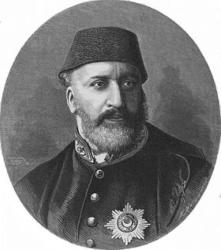
Abdul-Medjid I
 Turkey
- Reign and Succession
- Tanzimat Reforms
- Military reforms: Allowed non-Muslims to serve in the army.
- International Affairs
- Internal Strife
- Bankruptcy and Death
- Legacy
Reign and Succession
Abdul Mejid was born in 1823 and became the 31st sultan of the Ottoman Empire in 1839, following the defeat at Nezib and the death of his father, Mahmud II.
Tanzimat Reforms
Abdul Mejid embarked on a series of reforms known as the Tanzimat, influenced by Western culture and the advice of Mustafa Reshid Pasha. These reforms included:
Hatti-Sherif of Gulhane (1839): Granted equal rights to all Ottoman subjects, regardless of religion.
Military reforms: Allowed non-Muslims to serve in the army.
Legal reforms: Introduction of a Napoleonic Code-inspired legal system.
Technological advancements: Introduction of railroads and the telegraph.
International Affairs
In the 1840s, Abdul Mejid provided aid to Ireland during the Great Famine. In 1850, he refused to extradite political criminals to Austria and Russia, leading to Austria's expulsion of Ottomans from Montenegro. He supported England and France against Russia in the Crimean War (1853-1856), which had limited success in weakening Russian influence.
Internal Strife
Despite the reforms, the Empire faced internal tensions. The Hat Humayun (1856) promised further reforms, but they did not resonate with the Ottoman administrative structure. This led to unrest in Christian-populated areas, including Bosnia, Bulgaria, and Lebanon.
Bankruptcy and Death
In 1858, the Ottoman Treasury declared bankruptcy. Abdul Mejid's authority declined, and he died of tuberculosis in 1861. He was succeeded by his brother, Abdul Aziz, as per Ottoman tradition.
Legacy
Abdul Mejid had 8 daughters and 6 sons. The last four sultans of the Ottoman Empire—Murad V, Abdul Hamid II, Mehmed V, and Mehmed VI—were his sons. His Tanzimat reforms laid the foundation for modernization within the Empire, even if their full impact was not always realized during his reign.