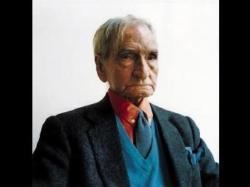
Abid Al Memalik
 Iran
- Early life and literary beginnings
- A pioneering newspaper editor
- Poetry and the Constitutional Revolution
- Public service and legacy
Adib al-Mamalek Farahani brought the voice of poetry into the expanding world of Persian journalism. A poet, editor, and public servant, he founded the newspaper *Adab* and later wrote for *Majlis*, a paper closely tied to Iran’s Constitutional Revolution. His poems kept the forms of classical Persian verse while turning toward the urgent subjects of a changing country.
Early life and literary beginnings
Born Mohammad Sadeq Hosayn in 1860, Farahani came from a family with a long literary and political lineage. He was born in the village of Kazaran near Soltānābād, in central Iran. He received his early education locally and began composing poetry as a young man, initially using the pen name Parvāna. Later he wrote under the name Amiri and became known by the honorific Adib al-Mamalek, meaning “the learned man of the realm.”
As his family circumstances changed after his father’s death, Farahani moved among different towns and took on administrative and educational work. His travels through Iran, the Caucasus, and Khiva broadened his experience of the region and its political currents. In Tabriz he served as a deputy head of the Luqmaniyya College, an institution connected with the spread of new educational ideas.
A pioneering newspaper editor
In 1898, Farahani founded *Adab*, an illustrated Persian weekly in Tabriz. The paper was among Iran’s early literary newspapers and combined writing on literature with broader cultural and public affairs. It later moved with him to Mashhad and then Tehran, reflecting the itinerant nature of his life and the changing centers of Iranian publishing.
Farahani also contributed to several other newspapers. He wrote for the official *Iran-e Soltani* in Tehran and spent time in Baku, where he edited a Persian-language supplement for the Turkish-language daily *Ershad*. In 1906, he became a leading writer for *Majlis*, the newspaper of the emerging constitutional period. He also published *Iraq-e Ajam*, giving him a role in several of the press’s new forums during a time of political transformation.
These editorial positions mattered because newspapers were becoming a public arena for ideas that had previously circulated more narrowly. Farahani’s work helped bring poetry, political commentary, and arguments about the country’s future to a wider readership.
Poetry and the Constitutional Revolution
Farahani was a prolific poet who worked in classical forms and displayed deep knowledge of Persian literary traditions. At the same time, his poetry responded to contemporary events. He wrote on the opening of Iran’s National Assembly in 1906, the Anglo-Russian Convention of 1907, the bombardment of the Assembly in 1908, and the restoration of the constitution the following year.
His poems expressed patriotic feeling and a concern for national freedom, while also reflecting his religious commitments and interest in Islamic unity. In a period when poets increasingly turned from purely idealized subjects toward the homeland and public life, Farahani showed how inherited forms could carry new political meanings. His verses appeared in newspapers, where they could join topical debate as it unfolded.
Farahani’s work as a poet and editor was closely intertwined: the press gave his poetry an immediate audience, while poetry brought a literary voice into the developing public sphere. His collected *Dīvān* was published posthumously, preserving a large body of work that otherwise had appeared across periodicals.
Public service and legacy
Alongside writing and editing, Farahani held government posts and later entered the judiciary. He served as a judge in several Iranian cities, including Semnan, Arak, Yazd, and Sāvajbolāgh. He died in Tehran on 21 February 1917, aged 56.
His career belongs to a generation that helped reshape Persian literature and journalism as constitutional politics emerged. Farahani did not abandon classical poetry; he adapted it to address national events and public concerns. Through *Adab*, *Majlis*, and his other editorial work, he also helped build a press culture in which literature and political discussion could meet. His legacy rests in that double contribution: the poet who turned toward the realities of his time and the editor who helped make those realities part of a broader conversation.