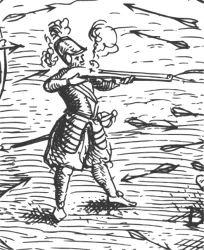
Abraha
Abraha began as an Aksumite commander in South Arabia and went on to rule Yemen as a powerful Christian king. He emerged from the upheaval that followed Aksum’s invasion of Himyar, established authority independent of the governor installed by the Aksumite king, and presided over a period documented by inscriptions carved in his own name. Later Muslim tradition also linked him to the celebrated “Year of the Elephant” story, though the details of the campaign against Mecca remain uncertain.
Origins and Rise to Power
Abraha’s early life is not securely known. Later accounts disagree about his background: the Byzantine historian Procopius said he had been enslaved to a Roman merchant at Adulis, while other traditions connected him to Aksum’s royal family. What is clearer is that he was a Christian Ethiopian, or Aksumite, who served in the military presence established in Yemen during the sixth century.
Around 525, the Aksumite ruler Kaleb invaded Himyar after the Jewish king Dhu Nuwas persecuted the region’s Christians. Aksum defeated Dhu Nuwas and placed a Christian viceroy, Esimiphaios, in power. Abraha later took control from that appointed ruler, apparently with the support of Aksumite troops who had settled in Yemen. Accounts of how this happened differ, but they agree that Abraha resisted efforts to remove him and eventually established his own authority.
The Aksumite king Kaleb sent forces against Abraha. According to the accounts preserved by Procopius, one expedition’s troops shifted their allegiance to Abraha, and a later force also failed to restore the former governor. Aksum eventually accepted the reality of Abraha’s rule, apparently in return for nominal tribute. Abraha ruled from Sana’a and adopted the titles of a South Arabian king, presenting himself as ruler of Saba, Dhu-Raydan, Hadramawt, and Yemen.
Rule and Inscriptions
Abraha’s reign is unusually visible through inscriptions in the Sabaic language, including a long text carved at the Great Dam of Ma’rib. These records are more dependable evidence than later stories about his life. The dam inscription recounts a revolt, the rebuilding of the dam, and the arrival of envoys associated with Aksum, Byzantium, Persia, and Arab leaders. It offers a rare glimpse of a ruler managing both local infrastructure and the diplomatic relationships of a region positioned between major powers.
The inscriptions also show Abraha invoking the Christian God, the Messiah, and the Holy Spirit. His rule came in a religiously diverse landscape, where Judaism had long been influential in Himyar and Christian communities were connected to Aksum. Abraha strengthened Christianity’s position and was associated in later accounts with a great church built at Sana’a. The available evidence suggests that his administration brought a measure of stability and prosperity, though his authority was enforced through military power.
Abraha also campaigned beyond Yemen. An inscription from Murayghan records a victory over the North Arabian tribe of Ma’add, probably during the 540s or 550s. The text describes a broad reach of political influence across Arabia. These campaigns likely served the practical aims of establishing control, securing routes, and asserting regional dominance.
The “Year of the Elephant”
Abraha is best known in Islamic tradition for a campaign against Mecca involving an elephant. Later accounts say he sought to draw pilgrims to a monumental church in Sana’a and marched on the Kaaba after an affront to the church. The story became associated with the “Year of the Elephant,” traditionally placed near the time of the Prophet Muhammad’s birth, and with the Qur’anic chapter Al-Fil, which recounts the defeat of an army of elephants.
The historical details are uncertain. Abraha’s inscriptions do record a major campaign into Arabia, but they do not confirm the full later story of an attack on Mecca with an elephant. Scholars have also questioned whether the expedition recorded in inscriptions and the traditional Meccan campaign were one and the same. The tale became central to later religious memory, but it should be distinguished from what can be established from contemporary evidence.
Final Years and Legacy
The exact end of Abraha’s reign and the circumstances of his death are not known. A later Persian invasion, around 570, ended Aksumite political domination in Yemen, but the sources do not establish whether Abraha was still alive at that point. His sons and successors faced a changing balance of power between Aksum, Persia, and local rulers.
Abraha remains a significant figure in the history of both Ethiopia and Yemen. He embodied the reach of Aksumite power across the Red Sea, yet became a ruler in his own right with a distinctly South Arabian royal identity. His inscriptions preserve a portrait of a Christian monarch engaged in diplomacy, military campaigns, and the repair of vital public works. Later tradition added the dramatic image of the elephant expedition, making his name endure far beyond the political world he governed.