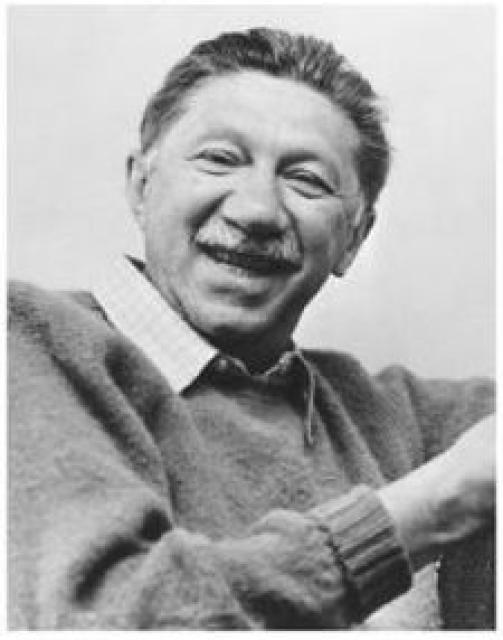
Abraham Harold Maslow
 USA
USA- Early Life and Education
- Academic Career
- Humanistic Perspective
- Maslow's Hierarchy of Needs
- Publications and Influence
- Death and Legacy
Early Life and Education
Abraham Harold Maslow, an influential figure in humanistic psychology, was born in New York City on April 1, 1908. He graduated from the City College of New York and the University of Wisconsin.
Academic Career
Maslow pursued a career in psychology, teaching at the University of Wisconsin, Brooklyn College, and Brandeis University. In 1967 and 1968, he served as the president of the American Psychological Association.
Humanistic Perspective
Maslow's ideas challenged the deterministic theories of Freud and behaviorists. He emphasized the role of human freedom and self-actualization. He believed that human nature encompasses a hierarchy of needs that stem from genetic origins.
Maslow's Hierarchy of Needs
According to Maslow, basic physiological needs must be met before higher-level needs can be addressed. These basic needs include food, water, shelter, sleep, and reproduction. Safety and security needs follow, such as protection and stability. Once these needs are met, humans strive for love and belonging, as well as self-esteem and recognition. Higher-level needs include truth, beauty, justice, and self-sufficiency.
Publications and Influence
Maslow published over 100 articles and authored several notable books. His seminal work, "Motivation and Personality," was published in 1954. His later works included "Towards A Psychology of Being," "Religions, Values, and Peak Experiences," "Eupsychian Management," and "The Psychology of Science." Maslow's ideas continue to influence the fields of psychology and personal growth.
Death and Legacy
Maslow passed away in Menlo Park, California, on June 8, 1970. His legacy as a pioneer in humanistic psychology has inspired generations of researchers and practitioners.


