Abram Schwartz
- The Play's Origins
- Mashkov's Adaptation
- The Role of Abram Schwartz
- A Father's Dreams
- The Burden of Expectations
- A Distant Reunion
- A Father's Resilience
- The Holocaust and Legacy
- David's Redemption
- The Film's Success and Critical Acclaim
The Play's Origins
The title role in the play was first performed by the young actor Vladimir Mashkov at the age of 24, a student at the renowned "Tabakerka" theater studio. Over the following years, Mashkov would embody the character of the elderly Jewish man Abram Schwartz over 400 times on stage.
Mashkov's Adaptation
In 2004, Mashkov turned to directing and adapted the play into a film simply titled "Papa." The play's original title was "Matrosskaya Tishina" (Sailor's Silence), written by Alexander Galich. The film's musical score was orchestrated by the legendary Russian violinist and conductor Vladimir Spivakov.
The Role of Abram Schwartz
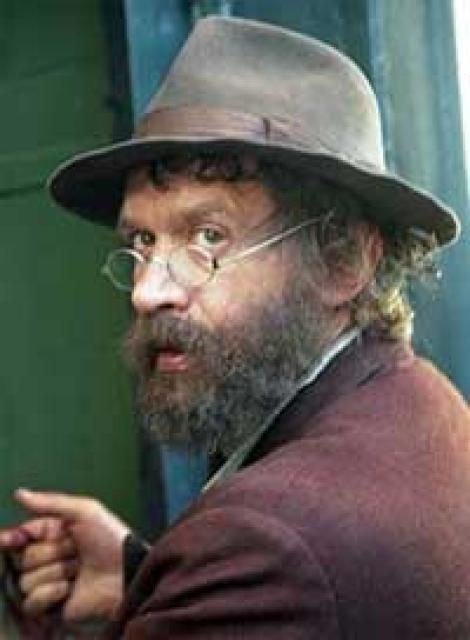
Mashkov shed his on-screen persona as a brooding sex symbol and meticulously transformed himself into a grizzled, unkempt provincial Jew, delivering a tour-de-force performance as Abram Schwartz.
A Father's Dreams
Abram Schwartz, a warehouse clerk from the forgotten provincial town of Tulchin, lived for his son, David. He relentlessly pursued his own aspirations through David's talent, believing him destined for greatness. Abram imposed rigorous violin lessons upon David, alternating moments of tender encouragement with harsh discipline.
The Burden of Expectations
David vacillated between embracing his father's artistic aspirations and resenting the burden of his father's expectations. Abram's occasional drunkenness and physical abuse further strained their relationship. Nonetheless, Abram's unwavering belief in his son's talent remained the guiding force in his life.
A Distant Reunion
David eventually achieved success, moving to Moscow to study at the prestigious music conservatory. Abram, remaining in Tulchin, longed to witness his son's triumph. Upon his unannounced visit to Moscow, he was met with disappointment. David, now a polished conservatory student, expressed shame at his father's unkempt appearance and humble manner.
A Father's Resilience
Abram, devastated by his son's rejection, maintained his composure and dignity, leaving him with the promised money. He returned to Tulchin, his heart heavy with sorrow.
The Holocaust and Legacy
During World War II, Abram was transported to a ghetto and later to a camp. He carried only two belongings: David's childhood violin and a photo album. Abram perished during the war, his final thoughts centered on his son.
David's Redemption
In his dying moments aboard a hospital train, David realized the depth of his father's love. He sought forgiveness, which Abram readily granted. David's delirious pleas of "Papa!" echoed through the train as it carried him away from Tulchin, now a devastated town devoid of Abram's presence.
The Film's Success and Critical Acclaim
"Papa" received accolades at film festivals, earning a Golden Eagle Award and multiple nominations. Mashkov's portrayal of Abram Schwartz is widely regarded as one of his most exceptional performances.


