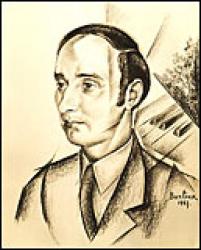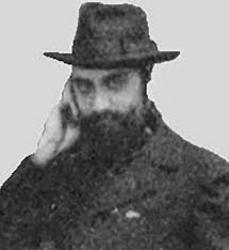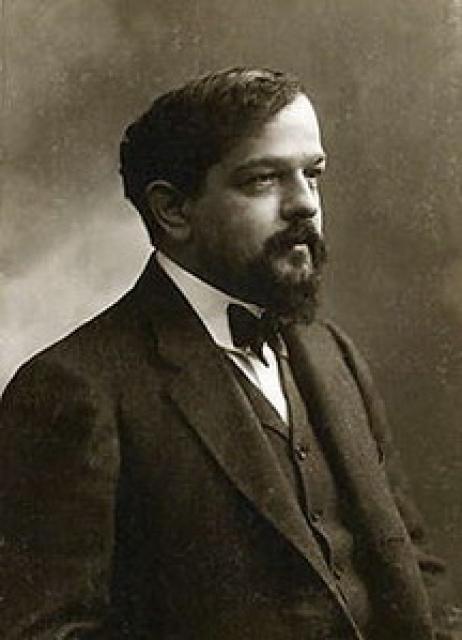
Achille-Claude Debussy
 France
- Claude Debussy: The Father of Impressionism
- Early Life
- Education at the Paris Conservatory
- Conflict with Harmony Professor
- Composition Studies
- Influence of Russian Music
- Encounter with Wagner
- Dismissal and Return to Paris
- Recognition and Legacy
Claude Debussy: The Father of Impressionism
Claude-Achille Debussy (August 22, 1862 – March 25, 1918) was a French composer who is considered the leading representative of musical Impressionism.
Early Life
Debussy was born in Saint-Germain-en-Laye, a suburb of Paris. His father was a small-scale shopkeeper, and his family moved to Paris when he was two years old. Debussy's early musical education began in Cannes, where he took piano lessons in 1870.
Education at the Paris Conservatory
In 1872, at the age of ten, Debussy entered the Paris Conservatory. He studied piano with Albert Marmontel, solfeggio with Albert Lavignac, and organ with César Franck. While not an exceptional student initially, Debussy's piano talent was recognized in 1877 when he was awarded second prize for performing a Schumann sonata.
Conflict with Harmony Professor
Debussy's studies in harmony and accompaniment with Émile Durand led to an open conflict. Durand's strict adherence to traditional harmony theory hindered Debussy's musical experimentation. Debussy later criticized this approach, stating that "harmony as taught at the Conservatory is a pompous and ridiculous manner of classifying sounds."
Composition Studies
Debussy began studying composition in December 1880 with Ernest Guiraud, a member of the Académie des Beaux-Arts. Prior to this, he had traveled to Switzerland and Italy in 1880 as a house pianist and music teacher for wealthy Russian patron Nadezhda von Meck.
Influence of Russian Music
Debussy's time in Russia exposed him to the music of Tchaikovsky, Borodin, Balakiriov, and others. He developed a great admiration for Russian music and its influence can be seen in his works.
Encounter with Wagner
During his travels with von Meck, Debussy visited Vienna in 1882 and witnessed Wagner's music drama "Tristan und Isolde." This performance left a profound impact on him and became a major source of inspiration.
Dismissal and Return to Paris
Debussy lost his position with von Meck due to his inappropriate affection for one of her daughters. He returned to Paris and resumed his studies.
Recognition and Legacy
Debussy emerged as a significant composer in the 1890s with works such as "Prélude à l'après-midi d'un faune" (Prelude to the Afternoon of a Faun). His music, characterized by its use of non-traditional harmonies, modal melodies, and impressionistic tone painting, had a profound influence on the development of 20th-century music.
Debussy's music represents the transition from late Romantic music to the modernism of the 20th century. He remains one of the most important and influential composers of all time.