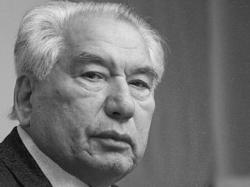
Adam Zagaevsky
 Poland
- Childhood and Education
- Literary Emergence
- Dissidence and Exile
- Return to Poland and International Recognition
- Poetry, Prose, and Essays
- Legacy and Influence
Childhood and Education
Adam Zagajewski was born on June 21, 1945, in Lwów, Poland, to Tadeusz Zagajewski, an engineer and inventor. After World War II, the family moved to Gliwice, where Zagajewski spent his formative years. He studied philosophy and psychology at the Jagiellonian University in Kraków.
Literary Emergence
In the 1960s, Zagajewski joined the "Today" literary group and became a prominent figure in the "Generation of 1968." His early poems exhibited a strong influence from Czesław Miłosz, blending lyrical sensitivity with an acute awareness of historical and political realities.
Dissidence and Exile
In 1975, Zagajewski signed the "Letter of 59," a dissident protest against political censorship in Poland. He participated actively in the Solidarity movement and published his works in samizdat. After martial law was imposed in Poland in 1981, Zagajewski went into exile in Paris.
Return to Poland and International Recognition
In 2002, Zagajewski returned to Poland. His work has been widely translated and acclaimed internationally, earning him numerous awards, including the Kurt Tucholsky Prize, the Neustadt International Prize for Literature, and the Goethe Medal.
Poetry, Prose, and Essays
Zagajewski's poetry is characterized by its contemplative and lyrical qualities, often exploring themes of memory, history, and the human condition. He has also published prose works, including essays on the writings of Bruno Schulz, Józef Czapski, Czesław Miłosz, and Zbigniew Herbert.
Legacy and Influence
Adam Zagajewski is among the most renowned contemporary Polish poets. His work has inspired and influenced generations of writers and readers worldwide, earning him a place among the literary giants of the 20th and 21st centuries.