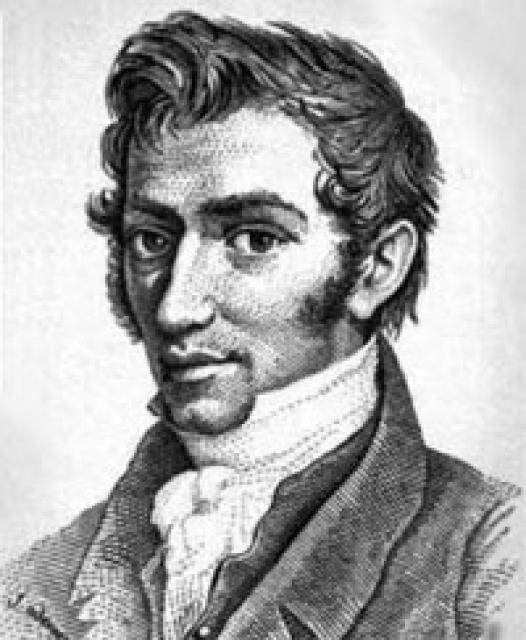
Adolf Ketle
 Belgium
- Early Life and Education
- Contributions to Mathematics, Physics, and Astronomy
- Pioneering Work in Statistics
- The Concept of the "Average Man"
- The Law of Large Numbers
- Social Physics
- Influence and Legacy
- Shortcomings and Criticisms
- Practical Contributions
- Conclusion
Lambert Adolphe Jacques Quetelet: The Founder of Scientific Statistics
Early Life and Education
Lambert Adolphe Jacques Quetelet, a Belgian mathematician, astronomer, meteorologist, and sociologist, was born on February 22, 1796, in Ghent. He exhibited exceptional mathematical abilities from an early age and became a mathematics teacher in his hometown at the age of 18. In 1819, he earned a doctorate in geometry and accepted a teaching position at the Athénée in Brussels.
Contributions to Mathematics, Physics, and Astronomy
Quetelet's interests extended beyond mathematics to include physics and astronomy. In 1825, he co-founded the journal "Correspondance mathématique et physique," which gained significant recognition in the scientific community. He also established the Brussels Observatory in 1832 and became a permanent secretary of the Brussels Academy of Sciences. His works in these fields, including his observations on Earth's temperature and electricity, laid the foundation for his späteren meteorological and statistical studies.
Pioneering Work in Statistics
Quetelet is widely recognized as the founder of scientific statistics. Through his mathematical and scientific background, he developed a systematic approach to collecting and analyzing data on social phenomena. He believed that human actions are governed by underlying laws, similar to the laws of nature.
The Concept of the "Average Man"
At the core of Quetelet's statistical approach was the concept of the "average man." He argued that within the variability of individual human characteristics, a central or "typical" human being emerged. This hypothetical construct, based on the aggregation of data, became a crucial tool for understanding social trends and behavior.
The Law of Large Numbers
Quetelet's law of large numbers states that as the number of observations increases, the average value of the observations approaches the true value of the population. This principle became a cornerstone of statistical theory and the foundation for drawing inferences about populations based on samples.
Social Physics
Quetelet extended his statistical methods to the study of human society, a field he termed "social physics." He sought to uncover the laws that govern human development, crime, and other societal issues. His work in this area led to the concept of the "social budget," which he believed could be used to predict and prevent social problems.
Influence and Legacy
Quetelet's pioneering contributions to statistics and social science had a profound impact on subsequent research and policy. His work inspired the establishment of statistical institutions and the development of the social sciences as academic disciplines. He is considered one of the most influential figures in the history of quantitative social research.
Shortcomings and Criticisms
While Quetelet's work laid the groundwork for modern statistics, it also faced some criticisms. His overemphasis on the "average man" has been seen as a potential oversimplification of human diversity. Furthermore, his interpretation of statistical laws as causal forces has been challenged by later researchers.
Practical Contributions
In addition to his theoretical work, Quetelet was actively involved in the practical application of statistics. He played a leading role in organizing the first International Statistical Congress in 1853, where he disseminated his ideas and encouraged collaboration among statisticians from different countries.
Conclusion
Lambert Adolphe Jacques Quetelet was a towering figure in the history of science and statistics. His pioneering work established the use of precise measurement and data analysis in the study of society. His contributions continue to shape the field of statistics and inform our understanding of human behavior and social phenomena.


