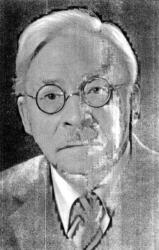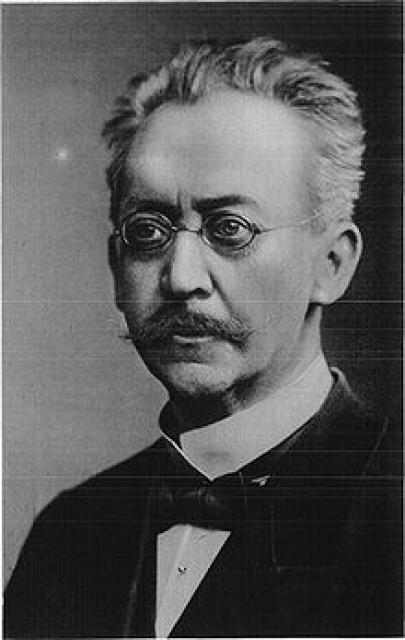
Adolf von Harnack
 Germany
- Adolf von Harnack
- Academic Career
- Royal Library of Berlin
- Liberal Theology
- Major Works
- Geschichte der altchristlichen Literatur bis Eusebius (1893-1904)
- Later Years and Legacy
Adolf von Harnack
Early Life and EducationAdolf von Harnack was born in Derpt, Estonia (now Tartu), on May 7, 1851. His father, Theodosius von Harnack, was a renowned professor of practical theology at the University of Derpt. His maternal grandfather, Gustav Evers, published the Handbook of the History of Dogmas by Münter.
Harnack studied at the University of Derpt from 1869 to 1872, then at the University of Leipzig, where he became a Privatdozent (1874) and an extraordinary professor (1876).
Academic Career
In 1879, Harnack became the Chair of Church History at the University of Giessen. He later moved to Marburg and served as a professor at the University of Berlin from 1888 to 1928.
Royal Library of Berlin
From 1905 to 1921, Harnack held the position of Director of the Royal Library (later renamed the Prussian State Library).
Liberal Theology
Harnack was a prominent representative of liberal theology, which sought to reconcile Christian doctrines with historical and scientific knowledge. He viewed church history as part of world history and believed that historical methods could be applied to it.
Major Works
Harnack's major works include:Opera Patrum Apostolicum (1876-1878)
Texte und Untersuchungen zur Geschichte der altchristlichen Literatur (45 volumes, 1882-1933)
Geschichte der altchristlichen Literatur bis Eusebius (1893-1904)
Lehrbuch der Dogmengeschichte (1886-1889)Das Wesen des Christentums (1900)
Die Mission und Ausbreitung des Christentums in den ersten drei Jahrhunderte (1902)
Later Years and Legacy
Harnack retired from the University of Berlin in 1928. He passed away in Heidelberg on June 10, 1930. His legacy as a leading theologian and historian continues to influence scholarship today.