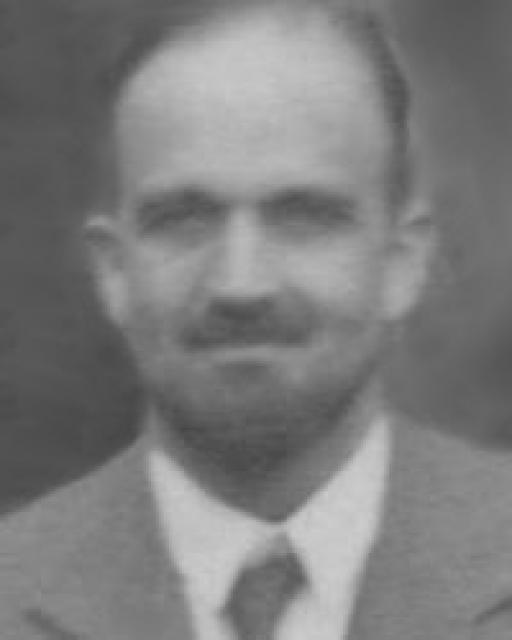
Adriaan Fokker
 Netherlands
Biography of Adrian Fokker
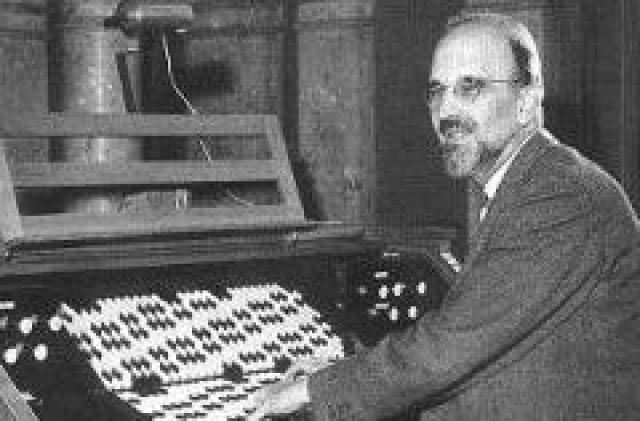
Adrian Fokker, a Dutch physicist, was born on August 17, 1887. He graduated from Leiden University in 1913 and spent a year working at the university. From 1923 to 1927, Fokker worked as a professor at the Higher Technical School. During the same period, from 1923 to 1955, he also served as the head of the physics department at the Taylor Museum in Haarlem.
Contributions and Work
Adrian Fokker's work spanned various fields, including radioactivity, X-rays, electron theory, relativity theory, gravity, and fluctuation theory. He established the law of distribution of the average energy of a rotating electric dipole in a radiation field, known as the Fokker-Planck equation. Fokker improved the method first used by Einstein to describe Brownian motion – the chaotic zigzag motion of tiny particles suspended in a fluid.
In 1914, Fokker collaborated with Albert Einstein to develop Nordström's theory of gravity using tensor analysis. In 1933, Adrian Fokker founded an international physics journal and served as its editor until 1959.
Legacy
Adrian Fokker made significant contributions to the field of physics through his research and publications. His work on the Fokker-Planck equation and his contributions to the theory of gravity have had a lasting impact on the scientific community.
Adrian Fokker passed away on September 24, 1972, leaving behind a legacy of groundbreaking research and a passion for advancing the field of physics.