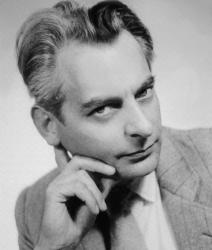
Adrian Boult
 Great Britain
Biography of Adrian Boult
Adrian Cedric Boult was born in 1889 in Chester, England. He was the second child and only son of Cedric Randal Boult and Katharine Florence. His father was a world judge and a successful businessman involved in oil trading and shipping. When Adrian was two years old, his family moved to Blundellsands, where he began his musical education. From a young age, Adrian had the opportunity to attend concerts in Liverpool, mostly conducted by Hans Richter. He studied at Westminster School in London, dedicating his free time to attending concerts by Sir Henry Wood, Claude Debussy, Arthur Nikisch, and Richard Strauss. During this time, Adrian also met Edward Elgar, introduced to him by the Schuster family. Adrian Boult attended Christ Church College in Oxford from 1908 to 1912, initially studying history but later switching to music under the guidance of Hugh Allen. He made numerous friends during his college years, including Ralph Vaughan Williams. In 1909, Adrian authored the work "Some Notes on Performance," in which he shared his vision of creating musical compositions. In 1910, he became the president of the University Musical Club. Additionally, Adrian was a skilled rower and a member of the Leander Club. He continued his education at the Leipzig Conservatory.

Early Career
Boult made his conducting debut in 1914 with the Liverpool Philharmonic Society. During World War I, his language skills in French, German, and Italian led him to work as a military translator. In his free time, he organized and conducted musical concerts, sponsored by his father, to popularize music. In 1919, Boult worked as the musical director for Sergei Diaghilev's ballet company. From 1919 to 1930, he taught at the Royal College of Music. In 1924, he became the conductor of the Birmingham Symphony Orchestra.
Later Career
In 1930, Boult, by then a highly respected and renowned musician, became the musical director of the BBC and the conductor of the BBC Symphony Orchestra. He retired from this position in 1949. In 1937, Adrian Boult was knighted, and in 1944, he received the Gold Medal of the Royal Philharmonic Society. From 1950 to 1957, he served as the principal conductor of the London Philharmonia Orchestra. By this time, he had received honorary degrees from 13 educational institutions and conservatories. Despite his accolades, Boult remained a humble individual who preferred the studios and rehearsal halls over the limelight. He included a wide range of foreign composers in his repertoire, striving to introduce their works to the British audience, including Bartók, Berg, Stravinsky, Schoenberg, Webern, and many others.
Later Years and Legacy
Adrian Boult's last public performance and studio recording took place in 1978. He authored several books, revealing the secrets of the conductor's art and writing his autobiography. Adrian Boult passed away on April 22, 1983, in London, at the age of 93. Since 1986, one of the halls at the Birmingham Conservatoire has been named after Sir Adrian Boult in his honor.