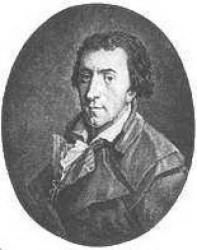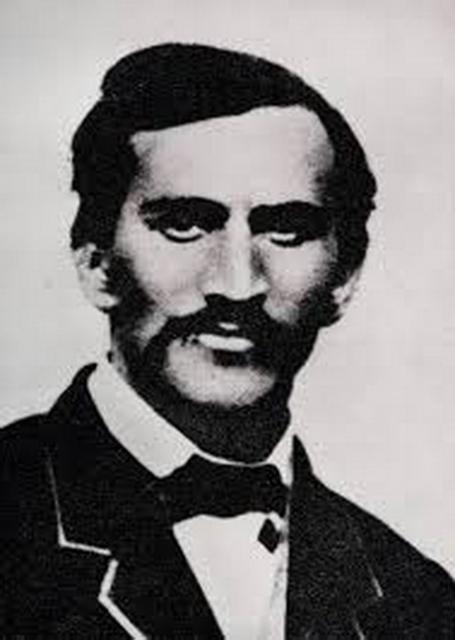
Agaton Giller
 Poland
- Birth and Education
- Revolutionary Beginnings
- Siberian Exile and Return
- Preparations for Uprising
- January Insurrection
- Exile and Continued Activism
- Return to Poland and Final Years
Birth and Education
Agaton Giller was born on January 1, 1831 in Opatówek, Poland, to Jan Kanty Giller, the mayor of the town, and Franciszka née Szpadkowska. He had a brother, Stefan Januarius, and a sister, Agrypina.
Giller received his early education in Kalisz, Warsaw, and Łomża. As an autodidact, he immersed himself in Polish history and literature.
Revolutionary Beginnings
During the Revolutions of 1848-1849, Giller attempted to cross into Hungary but was arrested by German authorities in Racibórz. Released from prison in February 1850, he worked as a tutor for the children of wealthy landowners.
In 1852, Giller moved to Kraków and became a non-matriculated student of history at the Jagiellonian University. However, his revolutionary activities came to the attention of Austrian police, and on April 10, 1853, he was handed over to the Russian gendarmerie as a Russian subject.
Siberian Exile and Return
Giller was imprisoned in the Alexandrovskaya Citadel in Warsaw and charged with anti-Russian activities. Sentenced to hard labor in the penal battalions of Eastern Siberia, he was released in 1858 and settled in Irkutsk. There, he founded a Polish school where he taught.
In October 1860, Giller returned to the Kingdom of Poland and became a journalist in Warsaw. He became involved in the City Delegation and participated in demonstrations.
Preparations for Uprising
After the bloody suppression of a demonstration on April 8, 1861, Giller published a proclamation, "Message to All Compatriots in the Polish Land," calling for solidarity and armed resistance against Russia. During the Warsaw Cathedral massacre on October 16, 1862, Giller was wounded.
In 1862, Giller became a correspondent for the Kraków newspaper "Czas" in the Kingdom of Poland. He joined the Central National Committee but opposed the radical "Reds" intent on starting an immediate uprising. Instead, he urged the liberal "Whites" to abandon the hope of resolving the conflict peacefully.
Giller believed that success could only be achieved through well-prepared and coordinated military action. On July 24, 1862, he drafted the guidelines for organizing a nationwide uprising. He also conceived the plan for creating an underground Polish state apparatus.
January Insurrection
In September 1862, Giller traveled to London with Zygmunt Padlewski, where he gained support and reached an agreement with Alexander Herzen, editor of the Russian revolutionary newspaper "Kolokol." After the outbreak of the January Insurrection in 1863, Giller resigned from the Central National Committee, believing it to be compromised by Russian influence.
However, he soon joined the Executive Committee, the insurgent government. Openly siding with the Whites, Giller returned to the Central National Committee on February 24, 1863, and insisted on giving dictatorship to Marian Langiewicz. He became his secretary.
On April 12, 1863, after Stefan Bobrowski was killed in a duel, Giller became the head of the Provisional National Government (later renamed the National Government) and remained in that position until May 23. During this time, he edited the newspapers "Stranica," "Ruch," and "Wiadomości pola bitwy." Giller drafted appeals to the citizens of Prussian- and Austrian-held Poland, as well as instructions for agents of the National Government abroad.
After the government was replaced, Giller traveled to Vienna as its representative. Receiving a death sentence from the "Reds," he withdrew from management.
Exile and Continued Activism
Following the suppression of the January Insurrection, Giller went into exile in Saxony, first in Dresden and later in Leipzig. In 1864, he was sentenced in absentia to four years of imprisonment for illegally publishing the journal "Ojczyzna" in Leipzig. He was forced to move to Switzerland, where he lived from 1864 to 1867. He founded a printing house in Bendlikon and published the magazine "Ojczyzna."
Giller also established a support society for Polish émigrés in Switzerland. While working as a librarian in Rapperswil, he conceived the idea of creating a Polish National Museum there, which was realized by Władysław Plater in 1870.
In 1867, Giller moved to Paris and published the newspapers "Ojczyzna" and "Kurier Paryski." He founded a support society for Polish students abroad.
Return to Poland and Final Years
In 1870, Giller returned to Galicia. He collaborated with the newspapers "Gazeta Narodowa" and "Ruch Literacki." In 1877, with Adam Sapieha, he attempted to form a national government in Galicia to fight against Russia with the support of Great Britain and Turkey. However, the Austro-Hungarian authorities expelled Giller from the country.
In 1878, Giller returned to Rapperswil. While working at the Polish National Museum, he proposed the creation of a Polish state treasury. He helped establish the Polish Legion in Turkey. On his advice, Poles in the United States formed the National Alliance of Poland in 1880.
Giller was allowed to return to Galicia in 1880. In 1884, he settled permanently in Stanisławów, living with his sister, Agrypina Kopiernicka. He contributed to the newspaper "Kurier Stanisławowski" and other journals in Lwów, Poznań, and the United States.
Agaton Giller died of pneumonia on January 1, 1887, in Stanisławów (now Ivano-Frankivsk). He was buried at the Sapieha Cemetery in the city. In the late 1970s, the Ivano-Frankivsk City Council decided to destroy the cemetery. The remains were exhumed and reburied at the Powązki Cemetery in Warsaw in 1981.