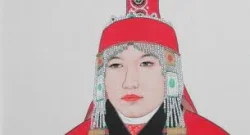
Ahmad Sanjar
Ahmad Sanjar spent nearly six decades at the center of Seljuk power, first governing the eastern province of Khurasan and later claiming senior authority over the Great Seljuk realm. His reign made Merv a brilliant political and cultural capital, but it also saw the empire lose ground to eastern rivals and finally fracture after Sanjar was captured by rebellious Oghuz tribesmen.
A prince in Khurasan
Sanjar was born around 1084–1086, a son of the Seljuk sultan Malik-Shah I. While still young, he was appointed to govern Khurasan, the vast eastern province that included much of today’s northeastern Iran and neighboring regions. Based at Merv, he built a durable power base and spent years defending and extending Seljuk authority across a frontier shared with rival dynasties and nomadic confederations.
In 1118, after the death of his half-brother Muhammad I, Sanjar asserted his seniority over his nephew Mahmud II, who ruled in the western territories. Their armies clashed in 1119, and Sanjar prevailed. He emerged as the Great Seljuk Empire’s supreme sultan, while Mahmud and other relatives continued to govern western lands as subordinate rulers. Sanjar’s authority was therefore powerful but not always direct: the empire was a network of courts, governors and vassals whose loyalty had to be continually maintained.
Merv’s golden years
Under Sanjar, Merv became a major center of government and learning. The sultan’s court attracted celebrated Persian poets and writers, among them Anvari and Nizami Aruzi Samarqandi. Sanjar’s long rule is often remembered as a high point for Khurasan, where political influence, scholarship and urban life flourished.
The sultan also faced persistent challenges on his borders. His victory over the Ghurids at the Battle of Nasa in 1117 helped establish his influence in the region. Later, however, the Qara Khitai, a powerful force from Central Asia, defeated him at the Battle of Qatwan near Samarkand in 1141. The loss weakened Seljuk control beyond the Syr Darya and marked a major reversal in the east.
Captivity and collapse
The most devastating blow came from within Sanjar’s own political sphere. In 1153, after tensions over taxation and the treatment of Oghuz groups near Balkh, rebellious tribesmen defeated his army and captured the sultan. For roughly three years, he remained their prisoner while Khurasan suffered raids, disorder and the breakdown of central authority. Sanjar escaped in 1156, but he could not restore the power he had once commanded.
He returned to Merv, where he died in 1157. The eastern Seljuk state unraveled soon afterward, although Seljuk branches continued to rule elsewhere. Sanjar’s mausoleum at Merv, a monumental brick structure, remains a reminder of the city’s former stature and of the ruler whose court made it a capital.
A complicated legacy
Sanjar’s story carries both the sweep of empire and the vulnerability of personal rule. For decades, he held together a vast eastern realm and cultivated a court that supported Persian literary culture. Yet the defeat at Qatwan and the Oghuz revolt exposed how dependent the Seljuk system was on military success and local alliances. His long reign was a high point for Merv, but its turbulent ending helped bring the Great Seljuk Empire’s eastern chapter to a close.