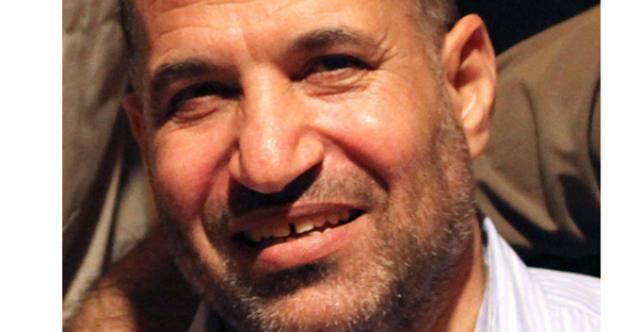
Ahmed Jabari
Ahmed al-Jabari (1960–2012) was a Palestinian leader in Hamas and the senior commander of its armed wing in Gaza, the Izz ad-Din al-Qassam Brigades. His rise coincided with Hamas’s consolidation of power in Gaza and with repeated confrontations with Israel. His career also placed him at the center of the 2011 prisoner exchange that secured the release of Israeli soldier Gilad Shalit.
Early life and imprisonment
Jabari was born in 1960 in the Shuja’iyya neighborhood of Gaza City. He studied history at the Islamic University of Gaza. Early in his political life he was associated with Fatah, a rival Palestinian movement. Israeli authorities arrested him in 1982, and he spent 13 years in prison. During that period he came into contact with Hamas figures and shifted his allegiance to the movement. He was released in 1995.
Rise within Hamas
After returning to Gaza, Jabari became a prominent figure in Hamas’s armed organization. He rose through its ranks and assumed operational command of the al-Qassam Brigades in the mid-2000s, becoming one of the movement’s most influential military leaders. He was widely credited with playing a central role in Hamas’s violent 2007 takeover of Gaza from Fatah forces, which followed the breakdown of Palestinian political unity.
Jabari operated largely out of public view, but his authority extended beyond military affairs. As Hamas’s military leadership gained influence over decisions in Gaza, he became an important political actor as well. Israeli officials held him responsible for overseeing attacks and for the 2006 capture of Shalit.
The Shalit exchange and final years
In October 2011, after years of negotiations, Shalit was released in a prisoner exchange involving more than a thousand Palestinian prisoners. Jabari personally accompanied the Israeli soldier to the handover point. The exchange made his role in negotiations unusually visible, even as he remained the head of an armed organization engaged in conflict with Israel.
On November 14, 2012, an Israeli airstrike struck Jabari’s car in Gaza City, killing him. The attack marked the opening of a major Israeli military operation in Gaza and an eight-day escalation of fighting.
Legacy
Jabari’s legacy remains inseparable from the armed conflict and political division that shaped Gaza in the 2000s. He was a key architect of Hamas’s military power and its control of the territory, as well as a central participant in the Shalit exchange. His killing removed a senior commander but also helped trigger a new round of violence between Israel and Hamas.


