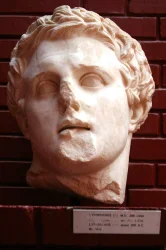
Alaeddin Pasha
- A prince in a young principality
- Service under Orhan
- The challenges of early Ottoman history
- A figure on the edge of the record
Alaeddin Pasha occupies a shadowy place in the early history of the Ottoman dynasty. Later tradition remembers him as a son of Osman Ghazi and the brother of Orhan, the ruler who succeeded their father. Accounts describe a prince who accepted Orhan’s leadership and served the emerging state, but the surviving evidence is sparse and some stories may reflect later ideas about how Ottoman succession ought to work.
A prince in a young principality
Alaeddin is usually placed among the sons of Osman, the founder of the Ottoman dynasty, which began as a small principality in northwestern Anatolia around the turn of the fourteenth century. His brother Orhan succeeded Osman and expanded the polity into a stronger regional power. The chronicles that describe this transition were written generations later, so details about the family and the succession are difficult to verify.
One well-known account says that Orhan offered the leadership to Alaeddin, who declined in favor of his brother. Historians treat this story cautiously: it may preserve an authentic memory of cooperation, but it also presents a model of peaceful succession that later Ottoman writers had reason to celebrate. What is clearer is that Alaeddin was associated with Orhan’s early rule and is described in Ottoman reference works as having served as a military commander.
Service under Orhan
Alaeddin is linked to the Ottoman campaign against the Byzantine emperor Andronikos III at Maltepe, also known as the Battle of Pelekanon, in 1329. The Ottoman victory strengthened Orhan’s position in Bithynia and helped open the way for further expansion around the Sea of Marmara. Accounts place Alaeddin among the commanders, though the details of his role remain limited.
Later narratives also associate him with the organization of the early Ottoman state. Some traditions credit him with reforms to military clothing, administration, and the development of the infantry. These stories are difficult to separate from the history of a different Alaeddin Pasha, remembered as one of the first Ottoman viziers. The two figures may have been conflated in later writing, and modern scholars do not treat every reform attributed to the prince as securely established.
The challenges of early Ottoman history
The early Ottoman period is unusually difficult to reconstruct. Contemporary records are scarce, and many detailed accounts come from later chronicles that blended historical memory with political storytelling. As a result, Alaeddin’s life cannot be traced with the confidence possible for later Ottoman rulers and officials. Even his relationship to the vizier remembered by the same name has been debated.
A figure on the edge of the record
Whether understood primarily as a prince, commander, or later symbol of cooperative leadership, Alaeddin reflects the formative years of the Ottoman state. His story is also a reminder that the dynasty’s beginnings were not documented in a full, continuous record. Later tradition gave him a substantial role; the historical evidence supports a more measured portrait of a member of Osman’s family associated with the establishment of Orhan’s rule.