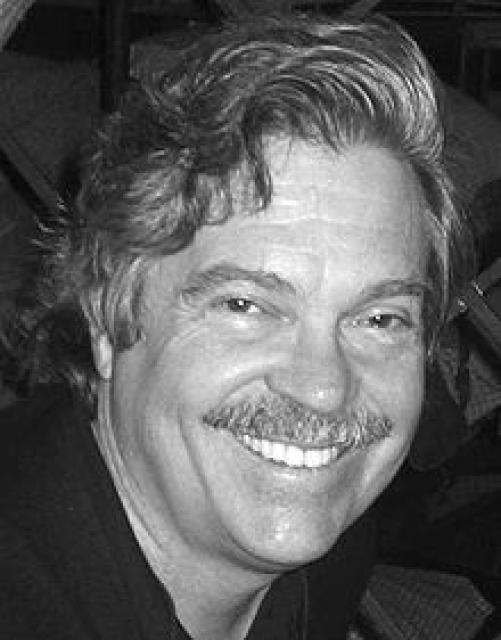
Alan Kay
 USA
USABiography of Alan Kay
Alan Curtis Kay was born in 1940 in Springfield, Massachusetts. His mother was a musician, so music played a significant role in Alan's upbringing. From a young age, he demonstrated exceptional humanities abilities, reading fluently by the age of 3. By the time he entered school, Kay had already read about 150 books, which greatly impressed his teachers.

After finishing school, Kay enrolled at the University of Colorado at Boulder, where he earned a degree in mathematics and molecular biology. During his time as a student, Kay also pursued his passion for music, playing the guitar in jazz ensembles.
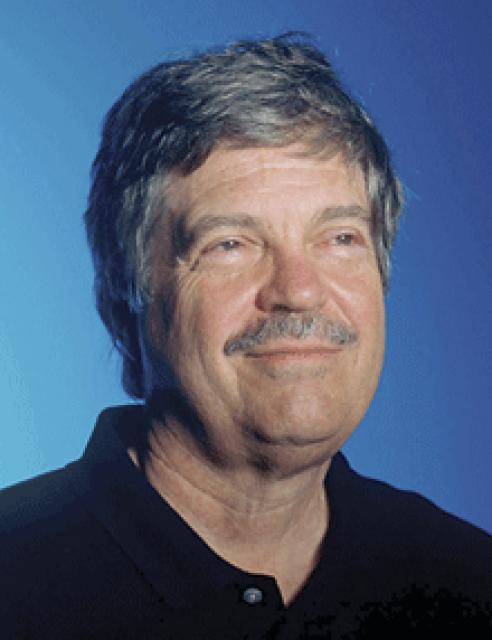
In 1966, Kay entered the graduate program at the University of Utah College of Engineering, where he obtained his master's and doctorate degrees. It was during his time at the college that Kay had the opportunity to work with Ivan Sutherland, one of the pioneers of virtual reality. This experience inspired Kay to pursue programming. He started programming in the Simula language and soon combined programming with his knowledge of biology to formulate the principle of biological analogy. According to Kay, an ideal computer should resemble a living organism, where each cell is autonomous but part of a unified system.
In 1968, Kay met Seymour Papert, known as the Father of the Logo programming language, and worked with him for some time at the Artificial Intelligence Laboratory at the Massachusetts Institute of Technology (MIT) and Stanford University. Starting in 1970, Kay joined Xerox Corporation's Palo Alto Research Center (PARC). There, he became one of the key developers of prototype networked workstations using the Smalltalk programming language. His inventions were later used by Apple Computer in the development of the Lisa and Macintosh computers. Kay is considered one of the founding fathers of object-oriented programming, alongside his colleagues at PARC and predecessors at the Norwegian Computing Center. It was Alan Kay who proposed the concept of the Dynabook, which laid the conceptual foundation for laptops, tablets, and e-books. He is also recognized as one of the early researchers in mobile learning, with many features of the Dynabook adopted in the One Laptop Per Child project, in which Kay actively participated.
After spending 10 years at Xerox PARC, Kay became a chief scientist at Atari, where he stayed for three years. From 1994, Kay worked at Apple until the closure of the Advanced Technology Group (ATG), one of the research and development divisions. He then joined Walt Disney Imagineering until the closure of the Disney Fellow program.
In 2001, Kay founded the Viewpoints Research Institute, a non-profit organization focused on children's education and software development. He later worked at Applied Minds and the Hewlett-Packard Advanced Studies Group until July 2005.
Currently, Alan Kay serves as the head of the Viewpoints Institute.
Kay has received numerous awards and recognition throughout his career, including the ACM Turing Award, Telluride Tech Festival Award of Technology, Kyoto Prize, and Charles Stark Draper Prize. He has also been awarded honorary degrees from universities such as the Georgia Institute of Technology, Columbia College Chicago, and the University of Pisa in Italy, among others.
Alan Kay is also known for his famous quote, "The best way to predict the future is to invent it."


