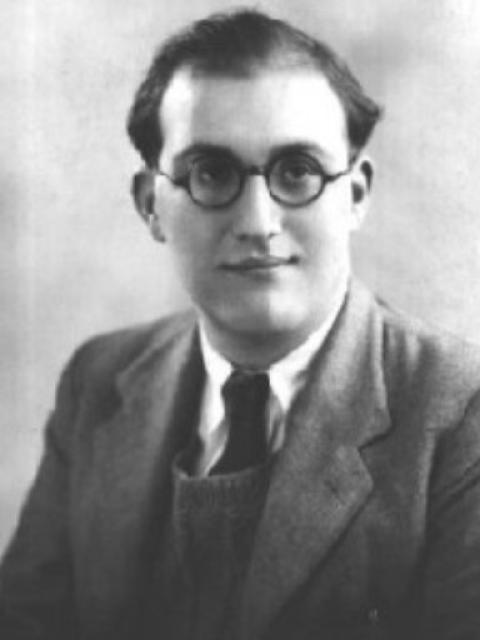
Albert Meltzer
 Great Britain
- Early Life and Introduction to Anarchism
- Involvement in the Spanish Civil War
- World War II and Objection to Conscription
- Anarchist Beliefs and Activism
- Founding of Black Flag and Other Endeavors
- Involvement in the Kate Sharpley Library and Direct Action Movement
- Later Years and Legacy
Early Life and Introduction to Anarchism
Albert Meltzer was born in Hackney, London, in 1920. Hailing from a Jewish family, he received his education at Latymer School in Edmonton. At the tender age of fifteen, he was drawn to anarchism during boxing lessons where he encountered Billy Campbell, a sailor, boxer, and fellow anarchist.
Involvement in the Spanish Civil War
As the Spanish Revolution erupted into the Spanish Civil War, Meltzer became actively involved in organizing solidarity appeals. He engaged in smuggling arms from Hamburg to the CNT in Spain and served as a liaison for Spanish anarchist intelligence in the United Kingdom. During this time, he also played an extra in Leslie Howard's film "The Pimpernel Smith" as Howard sought more authentic casting of anarchists.
World War II and Objection to Conscription
With the outbreak of World War II, Meltzer registered as a conscientious objector on March 9, 1940. However, he later renounced his objection and enlisted in the Pioneer Corps in 1945. At the tail end of 1946, he participated in the Cairo Mutiny.
Anarchist Beliefs and Activism
Meltzer firmly believed that communism was the only true form of anarchism. He fiercely opposed the individualist anarchism espoused by figures like Benjamin Tucker, arguing that the private police advocated by some individualists would ultimately constitute a government.
In the 1950s, Meltzer worked for the long-running anarchist newspaper Freedom but left in 1965 to set up his own venture, Wooden Shoe Press. He subsequently found himself embroiled in a longstanding and bitter dispute with fellow anarchist and former Freedom Press comrade Vernon Richards. The feud, which engaged many of their associates and affiliated organizations and persisted after their deaths, stemmed from a dispute over the potential relocation of Wooden Shoe to Freedom's premises but also involved political disagreements. Meltzer advocated a more militant and proletarian brand of anarchism than Richards and often labeled him and the Freedom collective as "liberals."
Founding of Black Flag and Other Endeavors
Meltzer played a pivotal role in establishing the anarchist journal Black Flag. He was also a prolific writer on anarchist themes, publishing books such as "Anarchism: Arguments For and Against" (initially published by Cienfuegos Press), "Gates of Anarchy" (co-authored with Stuart Christie), and his autobiography "I Couldn't Paint Golden Angels." Shortly before his passing, AK Press published his autobiography.
Meltzer's activism extended to co-founding the Anarchist Black Cross. The imprisonment of Stuart Christie in 1964 for his involvement in a plot to assassinate Francisco Franco drew attention to anarchist resistance and the fate of other imprisoned anarchists. Meltzer campaigned for Christie's release, and upon his liberation in 1967, Christie joined forces with Albert to establish the Anarchist Black Cross to foster solidarity with those anarchists who remained incarcerated. Their efforts included providing practical assistance to prisoners, such as food and medicine, and successfully pressuring the Spanish state to apply its own parole regulations.
Involvement in the Kate Sharpley Library and Direct Action Movement
Meltzer also helped establish the Kate Sharpley Library. He contributed to the library's publications and helped shape its philosophy. In the early 1980s, he joined the anarcho-syndicalist Direct Action Movement and remained a member, including in its successor, the Solidarity Federation, until his death. Initially a member of the Direct Action Movement's Central London branch, he subsequently joined its Deptford branch while residing in Lewisham.
Later Years and Legacy
Meltzer passed away after suffering a stroke at the 1996 Solidarity Federation conference in Weston-super-Mare. His biography, "I Couldn't Paint Golden Angels: Sixty Years of Ordinary Life and Anarchist Agitation," was published in 1996 and featured illustrations by Chris Pye.
In 1983, Meltzer faced charges of harboring an 8-year-old boy who had been abducted from his foster mother by his biological mother. Acting on behalf of the boy's biological father, he was acquitted. The biological mother had mistakenly believed she could not be convicted of kidnapping her own child as the law had changed weeks prior. She was also later acquitted as she erroneously believed her son was being abused. A City Limits report on the case described Meltzer as "a gentle and generous soul who is one of the leading figures in British anarchism."


