Mumia Abu-Jamal
 USA
USA- Early Life and Political Activism
- Career in Journalism
- The Arrest
- Trial and Sentencing
- Post-Conviction Developments
- New Allegations and Questions
- Abu-Jamal's Account
Early Life and Political Activism
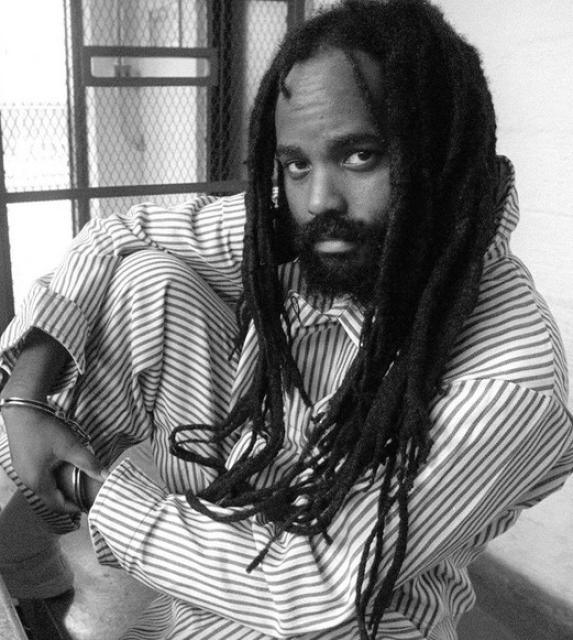
As an African American teenager, Mumia Abu-Jamal joined the Black Panther Party at age 14. He dropped out of high school, working for the party's offices in New York City and Oakland before leaving in 1970. Abu-Jamal returned to school, where he was caught distributing revolutionary literature.
Career in Journalism
After earning his GED, Abu-Jamal became a radio journalist, gaining recognition for his work. He served as president of the Philadelphia Association of Black Journalists. At the time of his arrest, he was a freelance radio reporter and taxi driver.
The Arrest
On December 9, 1981, Philadelphia Police Officer Daniel Faulkner pulled over a car owned by William Cook, Abu-Jamal's younger brother, who was driving nearby in a taxi. A shootout ensued, resulting in Faulkner's death and Abu-Jamal's serious injuries.
Trial and Sentencing
Abu-Jamal's trial took place in June 1982. The prosecution's case relied on eyewitness testimony from a taxi driver, a prostitute, a driver, and a pedestrian. The defense argued that the witnesses were unreliable and that Abu-Jamal was not the shooter. Despite his defense, Abu-Jamal was unanimously found guilty and sentenced to death.
Post-Conviction Developments
In 1994, Abu-Jamal began broadcasting three-minute commentaries on life from death row for National Public Radio's "All Things Considered," but protests from police unions and Faulkner's widow led to the cancellation of the contract.
New Allegations and Questions
In 1999, Arnold Beverly claimed to have killed Faulkner in a contract killing organized by corrupt police officers. However, Beverly's testimony was not used by the defense. Additionally, doubts emerged about the reliability of the prosecution's key witness and other alleged inconsistencies in the evidence.
Abu-Jamal's Account
Nearly 20 years after his arrest, Abu-Jamal stated that he was in his car at the time of the incident. He heard gunshots, saw his brother, and went to his aid when Faulkner allegedly began shooting at him. However, Abu-Jamal has not clarified why his gun was found at the scene or who fired it.