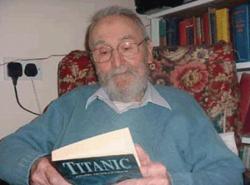
Albert Victor Veinik
 Belarus
- Albert I. Veynik: A Pioneer in Heat Transfer and Thermodynamics
- Academic and Scientific Career
- Contributions to Heat and Mass Transfer
- Controversy over Thermodynamics of Real Processes
- Later Life and Spiritual Pursuits
- Traumatic Death and Legacy
Albert I. Veynik: A Pioneer in Heat Transfer and Thermodynamics
Early Life and EducationVictor-Albert I. Veynik was born on October 3, 1919, in Tashkent, Uzbekistan. His father, Jozef, was a Slovenian mechanic and motorcyclist, while his mother, Genuefa, was a Latvian who had immigrated to Central Asia during the Stolypin Reforms. Veynik's birth certificate initially listed his name as Victor-Albert, but he later used the Slavic variant, Albert.
After completing his secondary education, Veynik enrolled in the Moscow Aviation Technological Institute (MATI), graduating in 1944 with a degree in aviation engine technology. In 1947, he defended his PhD thesis on "Heating and Cooling of Solids."
Academic and Scientific Career
From 1950 to 1954, Veynik served as an associate professor at MATI, specializing in aviation engines and heat engineering. In 1953, he earned his doctorate in engineering with a dissertation on "The Thermal Basis of Casting Theory."
In 1956, Veynik became a Corresponding Member of the Academy of Sciences of the Belarusian SSR. He subsequently relocated to Minsk, where he headed the Department of Theoretical Thermal Engineering at the Belarusian Polytechnic Institute (1957-1969).
Simultaneously, Veynik led laboratories in the Institute of Energy of the Belarusian Academy of Sciences, including the "Thermophysics and Atomic Energy" Laboratory (1956-1963), the "Industrial Thermophysics" Laboratory (1958-1990), and the "Physics of Contact Phenomena" Laboratory (1963-1990).
Contributions to Heat and Mass Transfer
Veynik made significant contributions to heat and mass transfer theory, particularly in the fields of casting and non-equilibrium thermodynamics. He developed the "quasi-equilibrium" approach, which introduced the concept of relaxation time into the analysis of thermal processes. Veynik also proposed the "dynamic temperature scale" and the "extended thermodynamics" model, both of which challenged the conventional understanding of thermal equilibrium.
Controversy over Thermodynamics of Real Processes
Veynik's most controversial work was his "Thermodynamics of Real Processes" (TRP), a non-equilibrium thermodynamics theory that he believed could revolutionize scientific understanding. However, TRP was met with resistance and criticism from the scientific community, and its validity has yet to be widely accepted.
Later Life and Spiritual Pursuits
In 1992, Veynik converted to Eastern Orthodox Christianity, taking the name Viktor. In his later years, he devoted himself to studying the interaction between the material and spiritual worlds, particularly the role of Christianity in human life and the universe.
Traumatic Death and Legacy
On November 24, 1996, Veynik was tragically killed in a car accident. He was laid to rest in a cemetery outside the village of Krupicy, Belarus.
Veynik's scientific and spiritual legacy continues to be debated and discussed. His contributions to heat transfer and thermodynamics, as well as his controversial theories, have left an enduring mark on the scientific landscape.