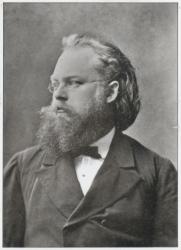
Alberto Cavos
 Russia
- Alberto Cavos: A Master Architect in Russia and Italy
- Return to Russia and Early Projects
- Marinsky Theatre and Architecture
- Bolshoi Theatre Restoration
- Later Projects
- Personal Life
- Legacy
Alberto Cavos: A Master Architect in Russia and Italy
Early Life and EducationAlberto Cavos was born in St. Petersburg, Russia, in 1796 to Italian parents. His father, Catterino Cavos, was a Venetian composer, and his mother, Camilla Baglioni, was a Russian noblewoman. Cavos received his education at the University of Padua, where he studied architecture.
Return to Russia and Early Projects
Upon his return to Russia, Cavos worked under the renowned Italian architect Carlo Rossi. His first commission was the reconstruction of the Bolshoi Stone Theatre in St. Petersburg, a project that took over ten years to complete. The theatre opened in 1836 and became the city's primary opera house.
Marinsky Theatre and Architecture
From 1847 to 1848, Cavos designed and supervised the construction of the Konnaya Circus on Theatre Square. In 1860, after a fire, he converted the circus into the Imperial Mariinsky Theatre, named after Empress Maria Alexandrovna. The theatre quickly became the heart of St. Petersburg's opera scene.
Bolshoi Theatre Restoration
In 1853, the Bolshoi Theatre in Moscow was destroyed by fire. Cavos was commissioned to rebuild the theatre, and his design significantly altered the original plan by Osip Bove. The new theatre opened in 1856, featuring an impressive auditorium with outstanding acoustics.
Later Projects
In 1859, Cavos completed the renovation of the Mikhaylovsky Theatre in St. Petersburg. His final project was the Paris Opera, which was commissioned by Napoleon III but was completed after Cavos's death.
Personal Life
Alberto Cavos was married twice and had seven children. His first wife, Nadezhda Polyakova, died of tuberculosis. His second wife, Ekaterina Khoroshchina, allegedly had numerous affairs, causing Cavos marital distress.
Legacy
Alberto Cavos is considered one of the most influential architects in Russian and European history. His contributions to the architectural landscape include the Bolshoi Theatres in Moscow and St. Petersburg, the Mariinsky Theatre, and numerous other buildings in St. Petersburg. His work is characterized by its grandeur, elegance, and attention to acoustic considerations.