Albrecht
 Germany
Biography of Albrecht
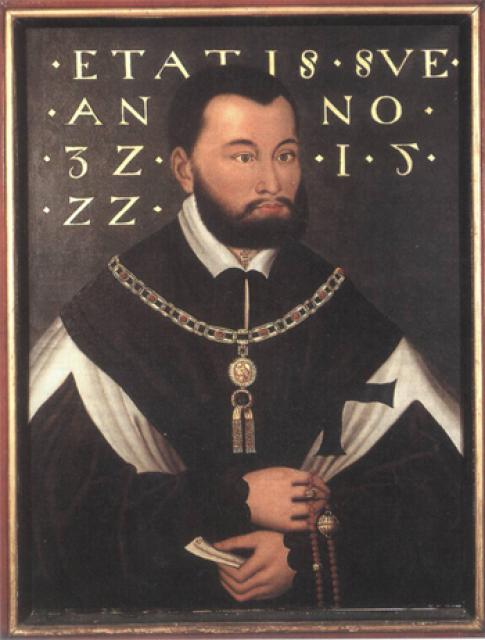
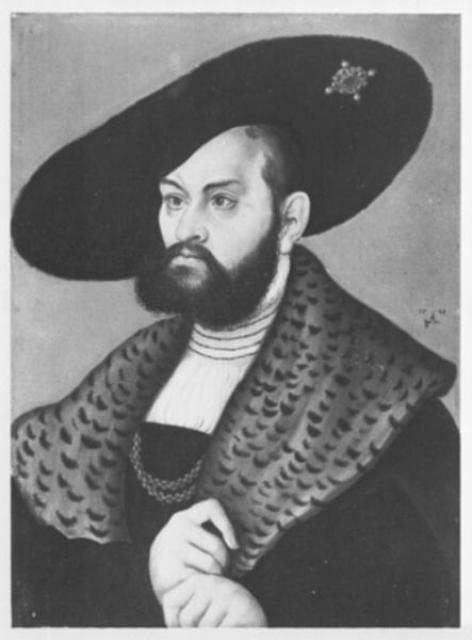
Albrecht, the last grand master of the Teutonic Order and the first Duke of Prussia, was born on May 17, 1490 in Ansbach. His father was Friedrich I Hohenzollern, Margrave of Brandenburg-Ansbach, and his mother Sophie was the daughter of the Polish king Casimir IV Jagiellon. Some researchers believe that Albrecht was not only a Hohenzollern but also a Rurikovich, as his maternal grandmother was Uliana of Tver, a Russian princess.
At the court of the Archbishop of Cologne, Albrecht received his education and became a canon. In 1511, he was elected the grand master of the Teutonic Order. In December 1519, the war between the Teutonic Order and Poland began. In February 1517, the first Prussian envoy, Dietrich Schönberg, arrived in Moscow and successfully negotiated a treaty between Russia and Prussia. This alliance led to the signing of the treaty on March 10, 1517.
Most of Prussia was devastated by the war, and in 1521, Albrecht was forced to sign a four-year truce with Poland in Thorn. He sought help from the emperor and princes, but in vain. After meeting Martin Luther, Albrecht leaned towards the Reformation. In February 1523, he publicly supported the Reformation movement in Nuremberg.
In 1525, Albrecht signed the Treaty of Krakow, which transformed Prussia from an order's ecclesiastical state into a secular duchy, under Polish suzerainty and hereditary in the Hohenzollern family. Reformation (Lutheranism) was introduced in Prussia, and the order's offices were abolished. Albrecht played a significant role in the development of education and printing in Prussia. He founded schools, a gymnasium, and in 1544, the University of Königsberg.
Albrecht also had a passion for music and established his own choir and instrumental ensemble. He actively participated in compiling song collections and composed the hymn "All Will Be as the Lord Wishes." Albrecht died on March 20, 1568, at the age of 78, and was buried in the Königsberg Cathedral. His legacy as a great leader of the Renaissance era laid the foundation for the economic, political, and cultural development of Prussia.
After Albrecht's death, his mentally ill son Albrecht Friedrich became the Duke of Prussia, but he was unable to rule independently. The Polish king appointed Georg Friedrich, Margrave of Brandenburg-Ansbach, as the regent. Eventually, the Brandenburg-Prussian state was established under the terms of the Krakow Agreement. Albrecht's contribution to Prussian history is commemorated by monuments and sculptures, such as the one near the Königsberg Cathedral.