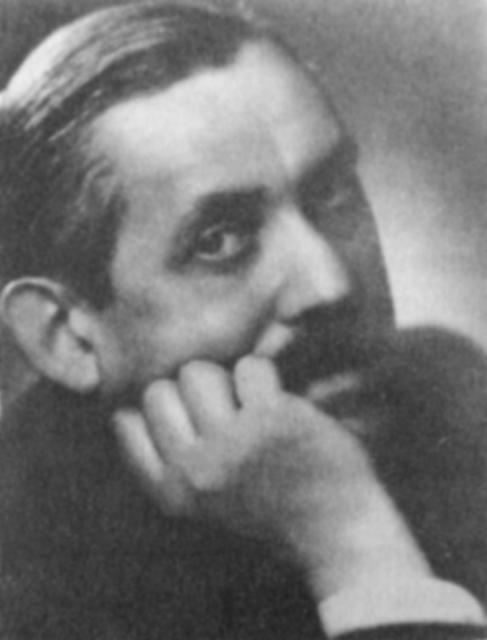
Aleksander Wat
 Poland
- A Polish Literary Pioneer: The Life and Legacy of Aleksander Wat
- Early Life and Education
- Literary Debut and Artistic Collaborations
- Leftist Affiliations and Imprisonment
- Literary Outpouring and Final Days
A Polish Literary Pioneer: The Life and Legacy of Aleksander Wat
Aleksander Wat (1900-1967) was a seminal figure in Polish literature, poetry, and translation. As one of the founding fathers of Polish Futurism, he left an indelible mark on the literary landscape of his time.
Early Life and Education
Wat was born into an affluent Jewish family with distinguished lineage, including the renowned scholar Rashi. He pursued his education at the Philological Faculty of Warsaw University, where he honed his literary skills.
Literary Debut and Artistic Collaborations
In 1919, Wat played a pivotal role in organizing the first Polish Futurist event. He made his poetic debut in print in 1920 and became acquainted with the legendary Russian poet Vladimir Mayakovsky. Wat actively translated Russian prose into Polish, fostering cultural exchange between the two countries.
Leftist Affiliations and Imprisonment
From the late 1920s, Wat aligned himself with left-wing circles. He served as the editor-in-chief of "Miesięcznik Literacki," an organ of the illegal Polish Communist Party. In 1931, his political activities led to his arrest and three-month imprisonment.
Literary Outpouring and Final Days
Despite enduring chronic illness, Wat continued to produce prolifically. In 1921-1925, he edited the avant-garde journals "Nowa Sztuka" and "Almanach Nowej Sztuki." His extensive translation work included the Polish translations of Dostoevsky's "The Brothers Karamazov," Tolstoy's "Anna Karenina," and Chekhov's short stories. Wat's poetry was widely praised and translated by notable writers like Joseph Brodsky and Czesław Miłosz. In 1967, the literary scholar Tomas Venclova published a comprehensive monograph on Wat's life and work entitled "Life and Art of an Iconoclast."


