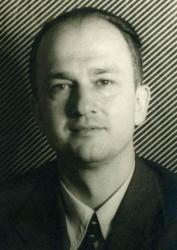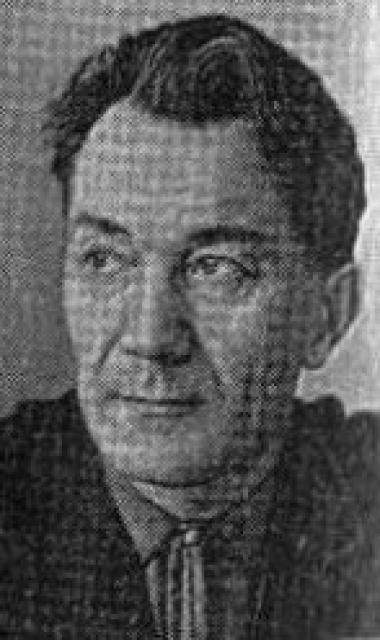
Ales Bachilo
 Belarus
- Early Life and Education
- Military Service and Journalistic Career
- Publishing and Literary Accomplishments
- Translations and Other Works
- Legacy and Recognition
Early Life and Education
Born into a peasant family, the renowned Belarusian poet completed his education at the Belarusian Pedagogical Technical School and the Minsk Teachers' Institute. His passion for language and literature led him to a teaching career in rural schools, where he imparted knowledge of Belarusian language and literature to young minds.
Military Service and Journalistic Career
In 1939, the poet's life took a different turn when he was conscripted into the Red Army. He fought valiantly throughout the Great Patriotic War until its conclusion. His post-war career took him to "Nastawnickaya Gazeta" (Teacher's Newspaper), where he rose through the ranks to become Deputy Chief Editor of the newspaper "Litaratura i Mastactwa" (Literature and Art). He also served as the Responsible Secretary of the journal "Polymya" (Flame).
Publishing and Literary Accomplishments
In 1972, the poet became Senior Editor at the publishing house "Mastackaya Litaratura" (Artistic Literature), where he played a pivotal role in shaping the literary landscape of Belarus. His literary debut came in 1934, and he went on to author numerous influential books.
Translations and Other Works
Beyond his original works, the poet enriched Belarusian literature through his translations from Latvian, Russian, and Ukrainian. Notably, he translated Nikolai Gogol's "Taras Bulba" and Alexei Tolstoy's "The Golden Key, or the Adventures of Buratino" into Belarusian. He also penned "Darogami Maksima," an essay exploring the life and works of Maxim Bogdanovich. His literary repertoire extended to drama as well.
Legacy and Recognition
In recognition of his outstanding contributions to Belarusian culture, the poet received the title of Honored Cultural Worker of the Byelorussian SSR in 1967. His name graces streets in Maryina Horka and Minsk's Shabany district, serving as a testament to his lasting impact on the nation's literary heritage.