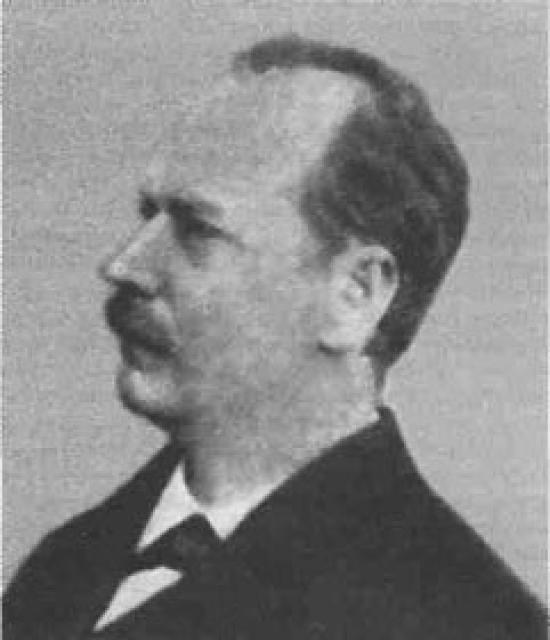
Anton Budilovich
- Anton Semenovich Budilovich: A Slavicist and Publicist
- Slavic Involvement
- Political Activism and Literary Contributions
- "On the Literary Unity of the Slavic Nations" (1877)
- Russification Efforts
- Academic and Cultural Contributions
- "Slavic Literary Societies and Learned Societies" (1869)
- Later Career and Legacy
Anton Semenovich Budilovich: A Slavicist and Publicist
Early Life and EducationAnton Semenovich Budilovich was a prominent figure in the Slavicist movement. Born in 1846 into a Uniate family, he was educated at the Lithuanian Spiritual Seminary and St. Petersburg University.
Slavic Involvement
After attending the Slavic Congress in Moscow in 1867 and subsequent travels abroad, Budilovich became deeply immersed in Slavic politics. His initial scholarly work, including his dissertation on the ancient Slavic language, took a backseat to his involvement in Slavic affairs.
Political Activism and Literary Contributions
Budilovich emerged as a political activist, agitator, and popularizer. He advocated for the cultural unity of the Slavic world and promoted Russia's role as a protector of Slavic peoples. His writings on this theme included:
"On the Literary Unity of the Slavic Nations" (1877)
"The Common Slavic Language in the Context of Other Common Languages of Ancient and Modern Europe" (1892)
Russification Efforts
Simultaneously, Budilovich worked on Russifying non-Russian regions of the empire. He founded the journal "Okrainy Rossii" shortly before his death to promote this agenda.
Academic and Cultural Contributions
Budilovich also continued his scholarly and cultural work. He taught at several institutions, including the St. Petersburg Spiritual Academy and Warsaw University. His writings covered a wide range of topics, from ethnography to literature and history. Notable works include:
"Slavic Literary Societies and Learned Societies" (1869)
"Was Jerome of Prague an Orthodox Christian?" (1870)"Is Panslavism a Dream?" (1872)
Respect and Recognition
Despite his unwavering Slavic nationalism, Budilovich remained a romantic idealist, preserving a link to the older, utopian Slavicophile tradition. His integrity and passion earned him respect even from his political opponents.
Later Career and Legacy
Budilovich's administrative career culminated in his tenure as Rector of the University of Tartu (1892-1901). As a member of the Ministry of Education, he continued to promote nationalistic policies. His founding of the Galician-Russian Society and editorship of "Moskovskie Vedomosti" marked his later years.
Budilovich's writings and activism left a significant legacy in the field of Slavistics. His work on Slavic unity and identity, as well as his contributions to Russian nationalism, remain influential today.


