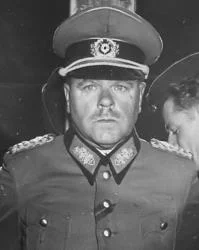
Alexander Burago
 Ukraine
Alexander Burago was a Ukrainian-born officer in the Russian Imperial Army whose name became closely tied to the capture of Plovdiv during the Russo-Turkish War of 1877–78. Leading a small cavalry squadron into the city ahead of the main force, he carried out a reconnaissance mission that developed into a daring advance through Ottoman-held positions. The action brought him military honors and lasting recognition in Bulgaria.
From Kharkiv to military service
Burago was born in Kharkiv on March 16, 1846, when the city was part of the Russian Empire. He entered military service and rose through the ranks in the imperial cavalry. By the time of the Russo-Turkish War, he was a captain serving with the Life Dragoon Regiment.
The war began in 1877 as Russia and its allies fought the Ottoman Empire in the Balkans and the Caucasus. Russian forces under General Joseph Gurko advanced through Bulgaria, where Plovdiv was an important city and strategic crossroads. As the campaign moved toward its conclusion, Gurko needed information about the Ottoman position and the condition of the city.
The advance into Plovdiv
On January 15, 1878, Burago led a combined squadron of 63 dragoons toward Plovdiv. The city was still held by Ottoman troops. His mission was to scout the situation, but he and his men crossed the Maritsa River and entered the city before the main Russian force. Their appearance surprised the defenders and led to a series of skirmishes around key points, including the railway station and post office.
Burago reported that Ottoman forces were withdrawing. The information helped Gurko’s larger force move into Plovdiv the following day, January 16, and secure the city. The episode became one of the best-known actions of the final phase of the campaign. In Bulgarian historical memory, Burago’s squadron is associated with the city’s liberation from Ottoman rule.
Recognition and later years
Burago’s role at Plovdiv brought him rapid recognition. He was promoted to colonel and awarded the Order of St. George, Fourth Class, one of the Russian Empire’s highest military decorations for bravery. His promotion followed within weeks of the battle, reflecting the importance imperial authorities placed on the operation.
The achievement also gave Burago a legacy beyond his army career. Plovdiv commemorated him with a monument, and the squadron’s advance remained part of the city’s public memory. The story has often been told as an example of how a small force, acting quickly and with limited information, could influence the progress of a larger military campaign.
Burago died in 1883 on the island of Madeira, reportedly from tuberculosis. He was buried at the Alexander Nevsky Lavra in Saint Petersburg. Though his life was short, the January 1878 advance into Plovdiv secured his place in the military history of the Russo-Turkish War and in the history commemorated by the city he helped bring under Russian control.